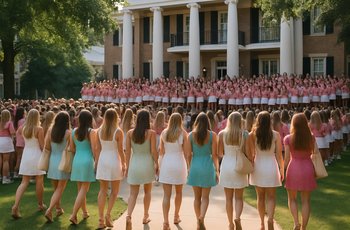

Before I joined a fraternity, I thought a chapter's social reputation was basically just gossip dressed up as useful information. Older students throwing shade at other houses, recruitment bias baked into word-of-mouth, cliques deciding who's cool and who isn't. I figured most of it was noise. Turns out I was half right - and half completely wrong.
I pledged as a sophomore, which meant I had a full year of watching Greek life from the outside first. I saw which chapters people talked about and how they talked about them. I heard things like "oh, Sigma Chi is solid over there" or "Kappa Sigma has been on thin ice for years" without really understanding what any of that actually meant in practice. I filed it all away and mostly ignored it. Then I joined, and I started to understand why that stuff sticks.
What Social Reputation Is Actually Made Of
Here's the thing - a chapter's social reputation isn't one thing. It's a composite. It's built from how members treat people outside the house, how the chapter handles itself at events shared with other organizations, whether they show up when something on campus matters, and honestly, just whether people outside Greek life feel comfortable around them. That last one is more important than most chapters realize.
Some of the best reputations I've seen up close belong to chapters that aren't flashy at all. They don't dominate every conversation about Greek life on campus. But when their name comes up, people consistently say the same things - they're solid, they're decent, they're good to work with. That kind of reputation is slow to build and hard to fake. It's the result of hundreds of small interactions over years.
The worst reputations work the same way, just in reverse. One bad incident doesn't define a chapter forever, but patterns do. If a chapter keeps showing up in the same kinds of stories - conflict at a philanthropy event, tension with a sorority they co-sponsored something with, members who treat campus staff dismissively - that calcifies into something. And it follows the chapter long after the specific people involved have graduated.
I've watched chapters at schools where Alpha Chi Omega or Zeta Tau Alpha had spent years building collaborative relationships with other chapters, and the goodwill from that was genuinely tangible. It showed up in how other organizations responded when something went wrong. People extended more benefit of the doubt. That's not nothing.
Does the Reputation Actually Affect Your Day-to-Day?
Honestly, more than I expected. Not in dramatic ways, but in a lot of small ones.
Recruitment is the obvious place. Prospective members - especially ones who are kinda on the fence about Greek life to begin with - are absolutely paying attention to what people say about a chapter before they ever step foot in it. My GDI friends, the ones I kept after joining, were pretty open with me about this. They had opinions about every major house on campus, and those opinions were shaped almost entirely by what they'd heard and what they'd seen secondhand. If your chapter's reputation is that it attracts people who only hang out with each other and look down at everyone else, you will feel that in who's willing to come to your recruitment events.
But it goes beyond recruitment. Chapters with strong social reputations get more cooperation from campus administration, get invited into collaborative events more often, and tend to have an easier time when something actually goes wrong and they need goodwill to draw on. Chapters with damaged reputations face more scrutiny, more skepticism, and sometimes real institutional friction that makes everything harder.
And within Greek life specifically - the way other chapters perceive yours matters for things like Greek Week, philanthropy partnerships, and the general social fabric of Panhellenic and IFC. A chapter that's burned bridges with the Delta Delta Delta or Pi Beta Phi chapters on campus is gonna feel that absence.
The Part That's Unfair (And the Part That Isn't)
Look, some of the reputation stuff is genuinely unfair. Chapters get saddled with legacies from members who graduated five years ago. A single bad situation can overshadow years of solid behavior. And there's definitely a class dimension to how social reputation gets constructed - chapters with more money, nicer facilities, and better-connected alumni often get softer coverage of the same mistakes that would crater a less-resourced house. That's real and worth being honest about.
But a lot of the reputation stuff is actually pretty fair. When a chapter consistently produces members who treat people with basic respect, shows up for campus community stuff, and handles internal problems without letting them blow up publicly - people notice. That behavior gets recognized even without a PR strategy. And when a chapter consistently does the opposite, that gets noticed too.
The thing I couldn't see from the outside was how much a chapter's internal culture drives its external reputation. They're not separate. How members treat each other - especially younger members, especially people who don't have social capital yet - tends to leak outward eventually. A chapter that runs on intimidation internally is usually also a chapter that people outside it find unpleasant or unpredictable to deal with.
That connection between internal culture and external reputation is probably the most useful thing I've figured out watching all this up close. And it's also the thing most chapters seem to either not understand or actively avoid thinking about, because it means accountability starts at home.
So yeah. Social reputation matters. Not because of status games or Greek life politics, but because it's actually tracking something real. The question worth asking isn't "what's our reputation" - it's "what are we doing that's creating it."