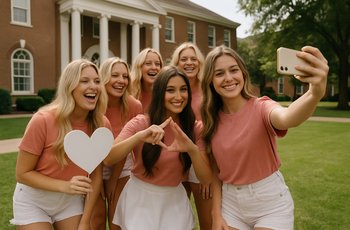
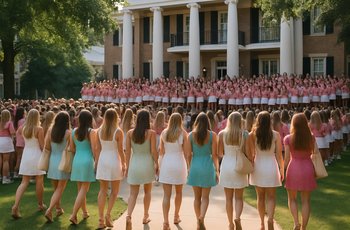
The University of Alabama runs one of the biggest, most watched sorority recruitment processes in the entire country. Thousands of potential new members. Dozens of chapters. A week that can feel like a job interview, a beauty pageant, and a marathon all compressed into a few brutal days. A recent piece in The Tuscaloosa News leaned into just how intense that process is - and brought in an expert to offer advice to women going through it. I read it, and I had thoughts. A lot of them.
Look, I'm an IFC guy. I'm not going to pretend I know what it's like to go through Panhellenic recruitment at Alabama from the inside. But I've watched it. I've seen what it does to women I care about - sisters, friends, girls I went to high school with who chose Alabama specifically because of what Greek life there means. And what it means is a lot of pressure packed into a very short window.
The Scale of UA Recruitment Changes Everything
Here's the thing about Alabama - the numbers are just different. We're not talking about a mid-size school with eight sororities and a manageable process. UA's Panhellenic system is consistently one of the largest in the country. When an expert has to step in to give advice on how to mentally prepare for sorority rush at a specific school, that tells you something real about how the experience differs from campus to campus.
The Tuscaloosa News piece didn't sensationalize it. It treated the process seriously, which I respect. Getting expert input on what is genuinely a high-stakes week for thousands of young women is responsible coverage. And the core takeaway - that the process is intense and recruits need real strategies to handle it - isn't surprising to anyone who's spent time in Greek life. But it does raise a question I think about a lot: are we actually setting people up well, or are we just throwing them into something overwhelming and calling it tradition?
I'm not anti-tradition. If anything, I'm probably the guy who gets too fired up defending traditions that other people write off as outdated. But there's a difference between tradition that builds something and tradition that just grinds people down. The ritual of recruitment is supposed to help both sides find a fit. When it becomes something people need expert coaching to survive, that's worth examining.
What Fraternity Recruitment Could Learn From This
On the IFC side, we don't talk about this nearly enough. Fraternity recruitment - especially at big schools - has its own version of intensity, but it's more diffuse, less structured, and honestly less scrutinized. There's no expert-quoted news article telling guys how to mentally prepare for rush week. Which might sound like a plus. It's not, necessarily.
The structure that Panhellenic recruitment has, as brutal as it can feel, does force a kind of accountability. Chapters at Alabama go through formal recruitment with rules, timelines, and a governing body watching. IFC recruitment at most schools is looser, which creates different problems - more room for informal pressure, more ambiguity about what's actually happening and why. I've seen guys completely lost during rush because nobody told them what to expect or how to think about the decision they were making.
The expert advice cited in the Tuscaloosa News piece - I can't quote it directly since the article itself wasn't fully accessible - but the premise alone is worth sitting with. Having someone say, here's how to approach this emotionally, here's how to manage expectations, here's what to do when it doesn't go the way you planned - that's not coddling. That's preparation. And we could use more of that on the fraternity side too.
The Part Nobody Talks About on the Other Side
There's a flip side to all of this that gets buried under the PNM experience. The chapters going through recruitment are under enormous pressure too. Sisters at schools like Alabama are making decisions that will shape their chapter for years - who comes in, what the pledge class looks like, how the culture evolves. That weight is real, and it falls on women who are often juniors and seniors barely older than the people they're evaluating.
Fraternity recruitment officers and Rho Gammas and IFC chairs aren't born knowing how to do this right. Most of us figured it out by doing it badly first. I've sat in rooms where decisions got made for the wrong reasons - not malicious, just immature. You don't fully understand how much those decisions matter until years later when you see how a single pledge class can change a chapter's whole identity.
That's why articles like the one in the Tuscaloosa News actually matter to me, even from the outside looking in. When media takes Greek recruitment seriously as a real experience worth covering thoughtfully - not just a punchline or a scandal - it raises the overall conversation. It signals that what happens during that week has real consequences for real people. And that the expertise exists to make it better.
Alabama's sorority rush isn't gonna change its fundamental character anytime soon. It's too big, too embedded in what that school is. But the fact that people are seeking expert guidance to handle it well - that's not weakness. That's taking it seriously. I can respect that, even from the fraternity side of the row.