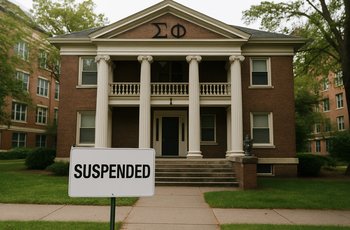

Two Georgia Southern fraternities are under investigation, and honestly, I want to sit with that for a second before we all move on to the next news cycle. The story came out of WTOC, and while details are still limited, the pattern here is worth talking about. Because this isn't an isolated thing. It never is.
I came into college as a GDI. Didn't want anything to do with Greek life. I had a whole internal monologue ready about conformity and dues and manufactured friendships. I watched the news stories roll in during my freshman year about fraternities getting suspended, chapters losing their charters, universities scrambling to distance themselves. And I thought, yeah, that's the thing I'm staying away from.
Then I joined as a sophomore. And I've spent the time since trying to make sense of both sides of that experience honestly - the skepticism I had before, and the reality I found after.
What the Georgia Southern Story Is Actually About
Here's the thing - WTOC reported that two fraternities at Georgia Southern are under investigation, but the story is light on specifics. And that's actually part of the problem. Investigations get announced, universities make statements, and then the whole thing quietly resolves or quietly doesn't. The public rarely sees the full picture. The students on campus definitely don't always know what's happening inside their own Greek community until something blows up.
That opacity is something I noticed when I joined. There's a version of Greek life that is very visible - the recruitment events, the philanthropy posts, the matching outfits. And then there's a version that operates in back channels, in chapter meetings, in conversations that never make it to an official record. Most of the time that gap is harmless. Sometimes it isn't.
The fact that two chapters at one university are under investigation at the same time is significant. It suggests this isn't a one-bad-actor situation. Something systemic is happening at Georgia Southern, and whether that's a campus culture issue, a leadership vacuum, or chapters that have been operating without real accountability for too long - that's the question nobody outside the university is really asking right now.
The Investigation Stage Is Where Things Get Lost
Investigations are weird because they feel like action but they're really just the beginning of maybe-action. I've watched chapters at other schools get investigated, come out the other side with a fine and some programming requirements, and go right back to doing whatever got them flagged in the first place. The investigation becomes a box that gets checked.
And look, I'm not saying that's what's gonna happen at Georgia Southern. I don't know what these chapters did. But the track record nationally is not inspiring. Kappa Sigma chapters have been suspended and reinstated at multiple schools. Sigma Alpha Epsilon has been through enough national-level scrutiny that their headquarters launched a whole restructuring effort years ago. The cycle is well documented.
What I notice - and this is from being inside a chapter now, not just watching from outside - is that the chapters most likely to end up in trouble are often the ones where the membership lost the plot on what they were actually doing there. There's no connective tissue between the values on paper and the decisions getting made on a Tuesday night. And nobody internally is asking hard questions because asking hard questions makes you unpopular with the guys you live around or eat with every day.
That's not unique to Greek life. It's a group dynamics problem. But Greek life creates unusually tight group dynamics with unusually limited external oversight. That's a combination that needs more structure than most chapters actually have.
Why This Keeps Happening at the Chapter Level
Here's my honest take after being on both sides: the problem isn't usually the national organization, and it's not usually the university. It's the eight to twelve guys who hold real informal power inside a chapter and who have decided - consciously or not - that accountability is for other people.
Chapters have presidents and risk managers and standards boards. They have all the org-chart stuff. But the guys who actually shape chapter culture are often not the guys in official roles. They're the ones everyone respects or fears or wants approval from. And if those guys are pointing the chapter in a bad direction, the formal structure rarely catches it in time.
I don't know the internal dynamics at the Georgia Southern chapters under investigation. Nobody outside those chapters does. But I'd be surprised if this investigation reveals a problem that showed up overnight. These things build.
What would actually change things isn't more investigations - it's chapters developing the internal culture to self-correct before it gets to the investigation stage. That's harder to mandate than any policy. It requires members who are kinda willing to be unpopular inside their own house when something goes sideways. In my experience, those people exist in most chapters. They just don't always speak up because the social cost feels too high.
The Georgia Southern story is still developing. I'll be watching to see what actually comes of it - not the press release, but the outcome. Because that's where you see whether the process is real or just performance.