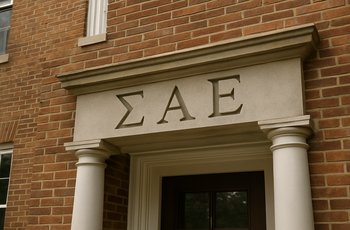

The University of South Alabama just held its Student Excellence Awards, and Greek-letter organizations were recognized in the mix. Not as an afterthought. Not in a separate, quieter ceremony tucked away from the real event. Alongside other student organizations, Greek chapters at USA got acknowledged for doing things right. And honestly, that's worth talking about - because it doesn't happen everywhere, and when it does, a lot of Greeks don't know what to do with it.
The default narrative around Greek life right now is punitive. Suspension, investigation, probation, another fraternity loses recognition. That's the news cycle most people are used to, and I'm not going to pretend those stories aren't earned sometimes. But when a university holds a formal excellence awards event and Greek organizations show up in it as honorees, that tells you something real about what's possible - and about what most chapters are quietly leaving on the table.
Recognition Matters More Than Chapters Admit
There's this weird thing that happens in Greek life where community service and academic achievement get treated like boxes to check. You do the philanthropy hours because you have to meet a quota. You track GPA because Panhellenic or IFC requires it. And then the semester ends and nobody really talks about it. The culture inside the chapter doesn't shift. The reputation on campus doesn't shift. You just move on to the next thing.
What USA did - publicly commending student and Greek-letter organizations together - is actually a small structural move with bigger implications. It puts Greek chapters in the same sentence as high-performing student groups campus-wide. It says to the student body: these organizations are part of what we're proud of here. That matters for recruitment, yeah, but it matters more for how members see themselves.
I was in a sorority where the philanthropic work was genuinely good. We raised real money, we showed up consistently, we had sisters who cared deeply about it. But it never felt celebrated by the university in any formal way. It felt like something we did in spite of the institution, not with it. I think that changed how seriously some members took it over time. When the work feels invisible to everyone outside the chapter, it's hard to sustain the internal motivation to keep doing it well.
The Gap Between Good Chapters and Recognized Ones
Here's the thing about awards like this - they don't always go to the chapters that are quietly doing the most. They go to the chapters that understand how to document what they're doing, how to submit for recognition, and how to position themselves within university systems. That's a skill. And it's genuinely unfair that some really solid chapters - maybe your smaller Panhellenic sorority, or a culturally-based fraternity that's been doing community work for years - never end up in these ceremonies because nobody on their exec board figured out the paperwork.
I'm not saying USA's awards were unfair. I have no idea which organizations were recognized or what criteria were used. But I've seen enough of how university recognition works to know that visibility and merit don't always line up the way they should. If your chapter is doing good work and nobody official knows about it, that's partly a documentation problem, and it's worth fixing.
Chapters like Alpha Chi Omega, Zeta Tau Alpha, and Pi Beta Phi have national philanthropy structures that basically build this skill into members automatically. You learn how to run a philanthropy event that looks good on paper and actually does something real. Smaller or newer chapters sometimes skip that infrastructure, and they pay for it in exactly this way - doing the work without getting the credit, which eventually makes it harder to keep doing the work.
What This Kind of Moment Is Actually For
Ceremonies like the one USA held are easy to be cynical about. It's a university patting itself on the back, you could say. It's Greek organizations getting a participation ribbon dressed up as an award. I get it. I've sat through enough formal banquets where the plaques felt emptier than the promises made during recruitment.
But I think that cynicism misses something. Moments like this are one of the few times a university signals, in front of an audience, that Greek life is worth having on campus. And those signals are getting rarer. A lot of administrations have decided Greek organizations are a liability they're managing rather than a community they're supporting. So when a university goes the other direction - when it builds a formal ceremony that includes Greek chapters among its honorees - it's actually saying something that doesn't go without saying anymore.
The chapters that get recognized in that room should take it seriously. Not because the award itself changes anything, but because the relationship it represents is one that's genuinely hard to build and easy to lose. University trust in Greek organizations is not a given right now. It's being rebuilt slowly, chapter by chapter, campus by campus, and moments like USA's Student Excellence Awards are part of that.
So if you're on exec somewhere and your chapter is doing real things - good GPA numbers, consistent philanthropy, community involvement that actually involves the community - figure out how to get that in front of your administration formally. Not because you need a plaque. Because the relationship matters, and right now Greek life needs more of these stories, not fewer.