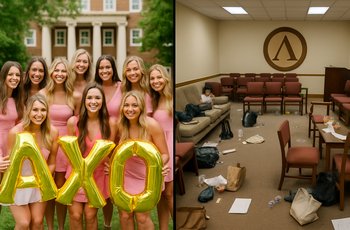

Willamette University put out a story about their Fraternity and Sorority Life program, and honestly it reads like the kind of thing Panhellenic councils across the country wish they could say about themselves without flinching. Scholarship. Service. Friendship. The trifecta. Easy to slap on a brochure, harder to actually build. But from what the story describes, Willamette seems to be doing something that a lot of bigger programs have completely lost track of.
I want to talk about why that matters - and why most Greek life programs at larger schools couldn't make the same case without a lot of asterisks attached.
Small Programs Get to Do It Right
Here's the thing about Greek life at a school like Willamette - it's small. Salem, Oregon is not a flagship state school. The program isn't managing thirty chapters, scrambling through a recruitment process with hundreds of potential new members, or dealing with the kind of institutional baggage that comes with a massive Greek row. And that's actually an advantage most people in this space don't talk about honestly.
When I was on Panhellenic council, the sheer scale of what we were managing made it nearly impossible to keep values at the center of anything. You're coordinating recruitment rules, filing grade reports, adjudicating violations, managing chapter standing disputes - and somewhere in the middle of all that, someone's supposed to remember why we're doing this. Small programs don't have the same bureaucratic weight. They can actually see each chapter. They can hold chapters accountable because there are fewer of them. That's not a knock on big programs. It's just a structural reality.
Willamette's story highlights connections to scholarship and service as genuine pillars, not marketing language. Whether the internal reality matches the press release - I can't tell you that. But the framing itself is different from what I usually see coming out of Greek life PR. There's no mention of rankings or reputations. No tier list logic embedded in the language. That alone is notable.
The Scholarship Piece Is the One Nobody Takes Seriously Enough
Scholarship gets mentioned constantly in Greek life materials. It shows up in every new member education program. It's in the ritual language of basically every national organization. And then a chapter goes on academic probation and half the council is surprised.
The reason it keeps failing as a real priority is because chapters don't build structures around it - they just claim it. There's a difference between saying your organization values scholarship and actually requiring chapter officers to review grade reports every semester, flagging members before they hit probationary thresholds, or tying chapter standing to academic performance in a meaningful way. Most councils I've seen treat scholarship like a checkbox. Willamette's story treats it like a pillar. Whether their chapters actually hold that line is something only their members know. But framing it correctly at the institutional level is step one, and plenty of programs don't even get that far.
When I was dealing with chapter standing reviews, the chapters that consistently performed academically were almost always the ones where it was a cultural expectation - not just a rule. Alpha Chi Omega and Pi Beta Phi chapters at schools with strong Panhellenic oversight tend to do this well. It's not a coincidence that their nationals invest heavily in academic resources at the chapter level. Structure produces outcomes. Vibes don't.
Service Is Where Greek Life Can Actually Prove Something
The service component is where I think Greek life has its strongest legitimate argument to make - and it's also where chapters get the laziest. One philanthropy event per semester, a canned food drive, a 5K that raises $800 and calls it a day. That's not service. That's a resume line.
Willamette's framing connects students to community through service as a structural feature of membership, not an add-on. That's the distinction that matters. When service is embedded in the membership experience from the start, it changes how chapters operate. It changes what members think they're there for. It makes recruitment conversations different because you're not just selling social access - you're selling a purpose.
I've sat through enough recruitment rule violations and social probation hearings to know that the chapters with the most problems are almost always the ones that lost the thread on why they exist. Service gives chapters a thread. It's not glamorous. It doesn't get TikTok engagement. But it holds things together in ways that social events never can.
Honestly, the fact that a small school in Oregon is putting out a story grounded in these ideas while larger programs are still trying to manage hazing scandals and suspension appeals says something uncomfortable about where Greek life's center of gravity actually is right now. It's not at the flagship schools with the biggest houses and the longest chapter histories. It's at places like Willamette, where the scale forces accountability and the culture hasn't been completely swallowed by reputation management.
That's not a feel-good takeaway. It's kind of a damning one for programs that should know better.