
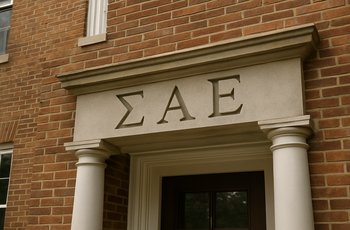
Nobody ever explained to me why my fraternity was called what it was. Like, I knew the letters, I wore the letters, I had the letters embroidered on approximately seven hoodies. But the actual reason those specific Greek characters got slapped onto our house? Total mystery. Turns out there's a whole history behind this stuff, and it's way more interesting than the two-minute spiel you get during rush week.
Greek-letter organizations didn't start as branding exercises. The whole tradition traces back to 1776 at the College of William and Mary, where a group of students founded Phi Beta Kappa. That one started as a literary and philosophical society - basically a group of smart guys who wanted to have serious intellectual conversations away from their professors. They picked Greek letters because Greek was the language of scholars and philosophers. Choosing those letters was a statement. It meant we take ideas seriously. It meant something.
What's funny is that Phi Beta Kappa eventually dropped the secret society model and became the academic honor society it is today. The fraternal model it inspired went a completely different direction. But the Greek letters stuck around, carrying that same original signal: this group stands for something specific, and the name is a shorthand for it.
The Letters Are Usually Initials - For Something
Here's the thing most members genuinely don't know. A lot of Greek-letter names are acronyms or abbreviations for Latin or Greek phrases that encode the founding values of the organization. Sigma Alpha Epsilon, founded in 1856 at the University of Alabama, has a founding motto in Greek that translates roughly to the true gentleman. The letters weren't random. They were chosen to represent ideals the founders actually believed in.
Same thing with sororities. Alpha Chi Omega was founded at DePauw University in 1885 by a music professor who wanted to create a space for women studying music and the arts. The letters connected to their founding ideals around harmony - both literally, as in music, and figuratively. Zeta Tau Alpha, founded in 1898 at Longwood University, chose letters with meaning tied to their founding principles around womanhood and service. These weren't random combinations picked because they sounded cool. There was intention behind them.
Compare that to how most people think about the letters now - as logos, essentially. And I get it. When you're deep in recruitment and you're trying to explain why someone should pledge your house, you're not exactly opening with a Greek etymology lesson. But there's something kind of lost in that gap between what the letters originally meant and how they're used today.
Why Organizations Guard Their Founding Stories
Part of why this history gets murky is that fraternities and sororities have always been protective of their founding narratives. Some of it lives in ritual. Some of it is technically secret - not in a weird way, just in the sense that certain symbolic meanings are shared with members rather than published on a website. I'm not gonna pretend I retained every detail from my own chapter's new member education, but I remember being genuinely surprised at how much thought had gone into the name and founding symbolism.
The secrecy piece has an interesting origin too. Early Greek organizations operated in a social environment where intellectual societies and student organizations were sometimes banned or viewed with suspicion by university administrations. Secrecy wasn't mysterious for its own sake - it was protective. The rituals and symbols were a way of maintaining identity and continuity even when outside forces pushed back against the group. The letters became a kind of code. Members knew what they stood for. Everyone else just saw a combination of Greek characters and moved on.
That dynamic still exists in a weird diluted form. Delta Delta Delta and Kappa Kappa Gamma and Pi Beta Phi all have founding histories that their members know - and that outsiders mostly don't. The letters carry meaning that is partially public and partially internal. Which is kind of fascinating when you think about it, even if most people don't.
When Organizations Choose Letters Strategically
Newer organizations have an interesting challenge. The classic Greek alphabet only has 24 letters. With hundreds of fraternities and sororities in existence, a lot of the obvious two and three-letter combinations were claimed long ago. So newer groups get creative.
Some organizations founded in the 20th century - particularly culturally-based fraternities and sororities in the National Pan-Hellenic Council - made very deliberate choices about their letter combinations to reflect founding missions around cultural identity, academic achievement, and community service. Alpha Phi Alpha, founded in 1906 at Cornell, chose letters tied directly to its founding mission of developing leadership among Black men in higher education. The letters weren't decoration. They were a declaration.
Sigma Chi has a founding story involving a dispute at Miami University in Ohio where the founders broke away from another fraternity over a membership decision they thought was wrong. The letters they chose connected to their founding principle around the Constantine vision - a whole symbolic narrative that members learn during initiation. I talked to a Sigma Chi alumnus once who could recite the entire founding story with more detail than I could recite anything from my own major. That's how deep it runs for some people.
Honestly, the organizations that have the strongest cultures tend to be the ones where members actually know what the letters mean. Not just as a quiz question during pledgeship, but as something they've actually thought about. There's a difference between wearing letters as a brand and wearing letters as a symbol of something you've bought into.
My chapter had a brother - graduated two years before me, absolute legend in the house - who had framed calligraphy of our founding motto in his room. Everyone kind of teased him about it. But he also knew more about why we existed than almost anyone else, and when he talked about the fraternity it actually sounded like something worth belonging to. The letters meant something specific to him. The rest of us were kinda catching up.
That gap - between members who know the history and members who just know the vibe - probably says something about how Greek organizations communicate their own identity. The letters are right there on the hoodie. The story behind them takes a little more work to find.