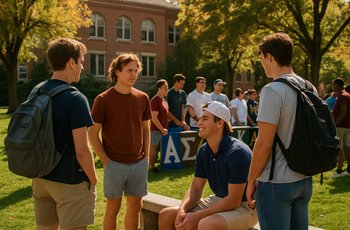
Something shifted on campuses around 2021 and it didn't stop shifting. Fraternities that once operated like they were untouchable started showing up to community service events, posting about mental health, running DEI workshops, hosting sober socials. And the question everyone's been too polite to ask out loud is: is any of this actually real, or is it just really good PR?
I graduated in 2023 so I watched this transition happen in real time - from the inside of a sorority that partnered with fraternities on almost everything. I have opinions. They're not all flattering. But they're honest.
The Pressure That Started This
Let's be clear about what actually drove fraternities to change: it wasn't a sudden moral awakening. It was pressure. Campus administrations started pulling recognition, national organizations started threatening to pull charters, and a generation of students started showing up to recruitment asking harder questions than their older siblings ever did. Chapters that refused to adapt lost members. Some lost their houses. So yeah, adaptation happened - but it was survival instinct before it was values.
That said, I don't think that means the changes are fake. People change for bad reasons and still end up changed. A Kappa Sigma chapter that starts doing mental health programming because their campus IFC told them to might actually build a culture where guys talk to each other honestly. The origin doesn't always corrupt the outcome.
What I saw at my school was a split. Some chapters took the new expectations seriously and used them as an actual framework for becoming something better. Others learned to perform seriousness really well. And from the outside, those two things look identical at a recruitment event.
What Actual Change Looks Like
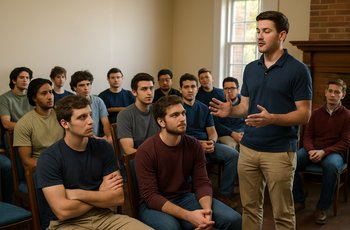
Here's how I started telling the difference. Chapters that were genuinely adapting changed their internal culture, not just their external calendar. They weren't just adding a philanthropy event before homecoming - they were having real conversations about what they expected from members, what accountability looked like, what it meant to actually support a brother who was struggling.
I knew guys in Sigma Chi who told me their chapter had started doing something they called "chapter check-ins" - basically structured time during chapter meetings where members could flag personal stuff they were dealing with. Not therapy, just acknowledged space. That's not a brochure change. That's a culture change.
Contrast that with a Sigma Alpha Epsilon chapter I won't name that plastered mental health awareness content all over Instagram while their new member process stayed exactly as it had always been - isolating, exhausting, and built around compliance rather than community. The social feed looked great. The experience didn't match it.
Honestly, the easiest tell is what a chapter does with conflict. Chapters that are genuinely changing handle internal problems differently. They don't just bury things to protect the chapter's reputation. They actually deal with them - sometimes messily, sometimes publicly. That willingness to be seen struggling is more honest than a perfectly curated "brotherhood" aesthetic.
The Membership Gap Problem
One thing that doesn't get talked about enough is how much turnover is affecting this whole shift. Fraternities have been dealing with membership drops at a lot of schools - smaller pledge classes, harder retention, members leaving mid-year. And when your chapter shrinks, the culture becomes more fragile.
A chapter of 80 guys can absorb a few bad actors without becoming defined by them. A chapter of 30 can't. And a lot of chapters are closer to 30 right now than they were five years ago. That cuts both ways. Smaller chapters can build tighter, more genuine communities - I've seen that happen. But they can also become cliquey or lose the diversity of perspective that makes a group actually function.
The fraternities that are adapting well to smaller membership are the ones that stopped treating size as a proxy for success. A Kappa Sigma chapter with 35 members who are actually invested in each other is doing more real brotherhood than a 90-man chapter where half the guys barely show up to anything. That's not a radical idea but it took a while for some chapters to get there.
What I'd Tell a First-Year Watching This
If you're looking at fraternities right now trying to figure out who's real and who's performing, here's what I'd actually watch for. Skip the Instagram. Attend the events that aren't recruitment-facing - the philanthropy stuff, the IFC meetings that are open, the campus involvement that happens in February when nobody's trying to impress anyone.
Talk to members one-on-one and off script. Ask them what they don't like about their chapter. Any member of a genuinely healthy organization will have a real answer to that question - something specific, something they're actually trying to fix. If every answer sounds like a talking point, that's information.
And pay attention to how they talk about men who left. Chapters that are doing the hard work of changing their culture will speak honestly about guys who didn't fit or who chose to leave. Chapters that are still operating on loyalty-above-everything logic will get weird and evasive. That reaction tells you more than any event they host.
The fraternities that are actually adapting to this moment aren't gonna look perfect. They're gonna look like groups of people who are trying something and sometimes getting it wrong and trying again. That's what real looks like. Polished and consistent and camera-ready is usually the other thing.