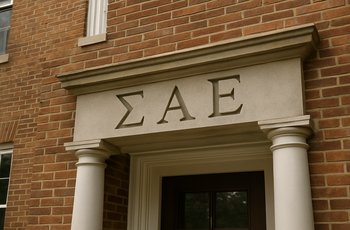

When I was going through recruitment at my school, every chapter president I talked to gave me the same answer when I asked about dues. Something vague. Something like "it depends" or "we have payment plans" or my personal favorite, the subject change disguised as a tour of the chapter house. Nobody lied to me exactly. They just made sure I didn't have the full picture until I'd already signed a bid card and told my parents I was joining.
I don't blame them entirely. Recruitment chairs aren't trying to be shady - they're just trying to hit their numbers before formal rush ends. But the result is the same: a lot of new members who show up to their first dues meeting absolutely blindsided. I've watched guys call their parents from the parking lot of our chapter house looking like they'd just been handed a car payment. Because, honestly, they kind of had been.
So here's the actual breakdown. The one the recruitment chair isn't gonna hand you during a campus tour.
The Number They Quote You Is Not the Number
Most chapters will give you a semester dues figure up front. Let's say it's $800. Sounds manageable, right? Maybe a little high, but you can swing it. Except that number almost never includes everything.
On top of base dues, most IFC fraternities charge separately for: national dues (paid to your headquarters, not your chapter), chapter fees (building fund, risk management insurance, philanthropy fund), new member fees specifically - which are often higher than regular dues because of programming costs - and in some cases, a one-time initiation fee that can run anywhere from $100 to $400 depending on the organization.
When I finally added it all up my first semester in Kappa Sigma, the real number was almost double what I'd mentally budgeted. The base dues were fine. The add-ons were the surprise. And by the time you're staring at the itemized list, you're already in. Bid accepted, name announced at the chapter meeting, new member pin in hand. The leverage is gone.
Sorority women tend to get hit even harder. Chapters like Kappa Kappa Gamma, Zeta Tau Alpha, and Alpha Chi Omega can run upward of $2,000 to $3,000 per semester when you factor in national dues, Panhellenic fees, housing-related costs if they have a house, and the formal recruitment infrastructure costs that somehow always trickle downstream to members. I had sisters at other chapters texting me their itemized bills like they were sending evidence of a crime.
The Stuff That Isn't Even On the Bill
Here's where it gets interesting. Beyond official dues, there's an entire shadow economy running through every chapter, and nobody writes it down anywhere.
Formal. Almost every fraternity and sorority has at least one formal per year - usually off-campus, often at a venue that requires a ticket purchase per person. Depending on the chapter and location, you're looking at $60 to $150 a ticket, and that's before you factor in a date's ticket, transportation, a hotel if it's out of town, and an outfit you probably didn't already own.
Philanthropy events. Your chapter runs them. Other chapters run them. You are expected to participate and often to purchase tickets or make donations. It's for a good cause and I'm not saying don't do it - I'm just saying it costs money that doesn't show up in any dues breakdown.
Merchandise. T-shirts for every social event, a few different intramural jerseys, bid day gear, recruitment shirts, big-little reveal items if you get involved in new member programming. Some of this is optional in theory. In practice, showing up to a chapter event without the shirt everyone else is wearing feels like showing up to a wedding in cargo shorts. Technically allowed. Socially noted.
Housing. If your chapter has a house and you're required to live in it - or even just strongly encouraged to - that's a whole separate budget conversation. Some chapter houses are cheaper than dorms. A lot of them aren't. And the ones that are cheaper often have maintenance situations that explain why they're cheaper.
So What's the Actual Total
I'm not gonna pretend there's one clean number, because it genuinely varies. A small IFC chapter at a mid-sized state school might cost you $1,500 per semester all-in if you're careful. A chapter at a larger school with a house, active programming, and a busy social calendar could run $4,000 or more per semester when everything is counted. That's real money. That's the kind of number that belongs in a conversation before bid day, not after.
And look, I loved my time in Greek life. I would do it again. But I also had a job, a grandfather who helped with dues once when things were tight, and a roommate my freshman year who dropped his chapter during new member education - not because of hazing or a bad experience, but because he did the math and realized he couldn't make it work. He never came back. That's a real outcome that happens more than chapters like to admit.
The honest recruitment chair - the one your chapter deserves but maybe doesn't have - would sit a prospective member down and walk through the full cost before a bid is extended. Not to scare anyone off, but because a member who understands the financial commitment and chooses it anyway is going to be a better, more engaged member than someone who felt blindsided and spent their entire new member period stressed about money.
Ask specific questions during rush. What are base dues. What's included. What's not. What did the average member spend last semester, total, including formals and events and gear. If the recruitment chair can't answer that last question, that tells you something too.