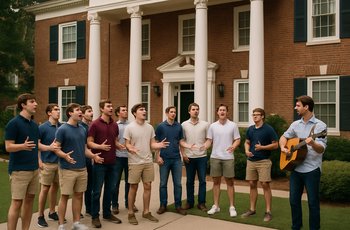

The Blue Banner just dropped a photo gallery covering fraternity and sorority life this semester at their campus, and honestly, good for them. Documenting Greek life through photos is something more student newspapers should do. Philanthropy events, formals, recruitment weeks - it all looks great in a slideshow. But here's the thing about photo galleries: they show you the finished product and nothing else. They don't show you what it actually took to get there.
I spent two years on Panhellenic council watching chapters pull off events that looked seamless from the outside. The photos always came out great. What you didn't see was the three emergency chapter president meetings we had the week before recruitment because two houses were flagged for potential COB violations. Or the spreadsheet nightmares trying to track compliance across nine chapters for a single philanthropy weekend. The gallery version of Greek life and the actual version barely resemble each other.
What Gets Left Out of the Frame
Photo coverage of Greek life tends to follow a pretty predictable pattern. You get the big philanthropy moments - the check presentations, the charity 5K finishes, the table-decorating competitions. You get formal season shots. You get bid day, which is genuinely one of the most photogenic days in any Greek calendar. And all of that is real. I'm not saying it's manufactured or fake.
But the stuff that actually determines whether a chapter is thriving or barely holding on - that never makes it into the gallery. You don't photograph a chapter's academic probation review. You don't get a candid shot of a Panhellenic standards board meeting where a house is one more infraction away from losing recruitment privileges. Nobody's snapping pictures during the 11pm call between a chapter advisor and an inter-fraternity council president trying to sort out a risk management dispute before it escalates to the university.
That's the semester too. That's actually a bigger part of the semester than most people realize.
Greek Life Governance Is Invisible Until It Fails
This is something I genuinely believe: the governance side of Greek life only becomes visible to the broader campus community when something goes wrong. A suspension gets announced. A chapter loses housing. An inter-fraternity council gets put on probation. Suddenly everyone's paying attention and asking questions.
But while things are running - while the process is working - it's completely invisible. Panhellenic recruitment rules exist in a document that most chapter members have never read. There are standards around grade point average minimums, event registration, alumni advisor documentation, and inter-chapter communication protocols that chapters are expected to follow every single semester. The councils managing that compliance are doing real work. It just doesn't photograph well.
I remember sitting in a standards meeting during my second year on council where we had to formally address a chapter that kept submitting late event registration forms. Not late by weeks - late by like 48 hours, repeatedly. Under our bylaws, that triggers a formal written notice. Three written notices in an academic year and they lose certain event privileges. The chapter president was frustrated. She thought we were being bureaucratic about paperwork. And yeah, maybe 48 hours feels petty. But those rules exist because when chapters start treating process requirements as optional, you get bigger problems downstream. That's not a theory - I watched it happen.
The photo gallery version of that story is just... a chapter at their philanthropy event smiling for the camera. Which is fine. But it's not the whole picture.
Why Coverage Like This Still Matters
I don't want to come across as dismissing what The Blue Banner did here. Honestly, consistent coverage of Greek life - even photo-based coverage - matters more than people give it credit for. When student media shows up to Greek events, it signals that these organizations are part of campus life worth paying attention to. It creates a record. It gives chapters something to point to when they're making the case to university administration that they're active, engaged, and contributing to campus culture.
And that argument has to get made constantly. Greek life is always one bad news cycle away from a policy review somewhere. Having a visual record of what chapters actually do - the community service, the fundraising, the campus engagement - is not nothing. Chapters at schools without strong student media coverage have a harder time making their case when they need to.
So the gallery has value. I'm just saying it's a starting point, not a complete picture.
What I'd actually like to see from campus media covering Greek life - and this is a take I'll stand behind - is more coverage of the governance layer. Talk to Panhellenic presidents. Ask inter-fraternity council officers about what their standards processes actually look like. Report on recruitment rule changes before they take effect, not just on bid day results. That kind of coverage would do more for accountability and transparency in Greek life than any number of photo galleries.
The chapters that are doing things right have nothing to fear from that scrutiny. And the ones that aren't - well, sunlight is a better accountability tool than a standards board citation most of the time. Not always. But most of the time.
The semester is more than its best moments. Greek life is more than its most photogenic days. Anyone who's actually worked inside these systems knows that. The question is whether the people covering it from the outside are ever gonna dig past the surface to find it.