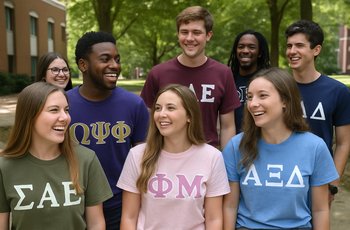

There's a New York Post piece making the rounds right now about USC sorority recruitment, and it's the kind of story that makes you wince if you actually care about Greek life. The headline calls it "ruthless tactics" in the hunt for A-list offspring - billionaire daughters, celebrity kids, the whole thing. And look, I know tabloid framing exists for a reason. But the underlying story is real, and it points to something that's been quietly rotting at the core of prestige-chasing Greek culture for a while now.
I'm not here to pile on USC specifically. What's happening there isn't unique to one school or one Panhellenic council. But when a major outlet is reporting that chapters are actively targeting recruits based on family wealth and celebrity connections - treating rush like a talent acquisition strategy for a hedge fund - you have to call that out. Because it's not what any of this is supposed to be about.
When Recruitment Becomes Talent Scouting
Here's the thing about rush. It's already awkward and high-stakes and weirdly performative even when chapters are doing it right. Add a behind-the-scenes ranking system built around whose dad has a Forbes profile and you've turned a membership process into something closer to a casting call. The PNMs walking through those doors thinking they're being evaluated on who they are - their personality, their values, whether they'd actually fit - deserve better than that.
I went through IFC recruitment. I know the chapter had preferences. Every chapter does. That's the whole point of rush - figuring out who belongs. But the preference was supposed to be about fit. About whether this guy was gonna show up for his brothers, whether he'd carry the chapter forward with some integrity. Not about whether his family name would look good in a newsletter.
When you start recruiting resumes instead of people, you end up with a chapter full of strangers who have nothing holding them together except proximity and status. That's not a brotherhood. That's a networking event that never ends.
The Traditions That Actually Hold Chapters Together
What bothers me most about the status-chasing model is what it destroys without anyone noticing. The stuff that makes Greek life actually matter - the rituals, the founding stories, the moments you don't post on social media because they're too real - none of that works when membership is built on a wealth screen.
I remember initiation night in my own chapter. The older guys talked about what the letters meant to them. Not what the chapter's reputation was. Not what it could do for your LinkedIn. What it meant - the actual history, the guys who built this thing before we were born. That kind of moment only lands when the people in the room bought in because they believed in something, not because they cleared a background check on their family income.
Sororities have their own version of that. The founding rituals, the creed, the chapter meetings where something real gets said. All of that becomes hollow pretty fast when membership selection is a social arms race. The girls who actually belong in those chapters - the ones who'd carry the chapter's values forward for decades - might be getting screened out in favor of someone whose dad owns a production company.
That's not a small thing. That's the chapter eating its own future.
Prestige Isn't the Problem. How You Chase It Is.
I want to be clear about something: wanting your chapter to be excellent isn't wrong. High standards are fine. Good chapters have always had them. Delta Delta Delta chapters that set the bar high academically, Alpha Chi Omega chapters that hold the line on character - that stuff matters and it works. Wanting to build something impressive is not the same as running a recruiting operation filtered by net worth.
The difference is what you're actually selecting for. Excellence built on shared values and genuine commitment compounds over time. Excellence built on family pedigree collapses the second the alumni stop writing checks or the celebrity connection stops generating buzz. One of those things creates a chapter that lasts. The other creates a brand that eventually gets exposed - in, apparently, the New York Post.
Panhellenic councils have a real responsibility here. The USC story didn't come out of nowhere. It's the result of a recruitment culture that went unchecked for long enough that it became the norm. And once a norm settles in, it's genuinely hard to dislodge. Chapters that try to recruit differently get disadvantaged in the short run - they're passing on the high-profile bids, potentially losing status points in whatever informal ranking system exists on that campus. It takes real institutional backbone to hold the line on values-based recruitment when the pressure is running the other direction.
Honestly, that's what Panhellenic leadership is for. Not just coordinating schedules and setting recruitment rules. Actually holding chapters accountable when the process drifts into something that embarrasses everyone - including, clearly, the chapters involved, who are now famous for the wrong reasons.
The women who join sororities because of what the chapter stands for, because of the friendships and the rituals and the experience of belonging to something real - they're the ones who stick around after graduation. They're the ones who come back for Homecoming, who mentor new members, who make the chapter mean something twenty years from now. No amount of billionaire-adjacent social capital replaces that. And the chapters still operating like it does are gonna find out the hard way.