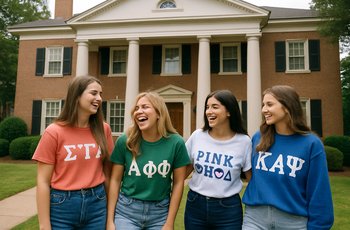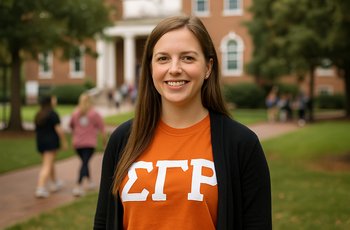
Molloy University just made history by establishing its first fraternity and sorority, and honestly, most people outside of Long Island probably scrolled past that headline without a second thought. That's a mistake. Because what's happening at Molloy isn't just a small private Catholic university checking a box - it's a reminder of something Greek life keeps proving over and over again: the demand for this kind of community doesn't go away just because a school hasn't gotten around to building it yet.
The story, reported by Newsday, marks a genuine first for Molloy. Not an expansion. Not a recolonization after a suspension. A first. As in, there was nothing before this. And for anyone who remembers what it felt like to find their people through Greek life, that's actually kind of significant.
Why This Matters More Than the Headline Suggests
Here's the thing about smaller, faith-affiliated schools - they tend to lag behind on Greek life not because students don't want it, but because the institutional appetite for it takes longer to develop. Molloy is a Catholic university with about five thousand undergraduates. It's not a flagship campus with a massive Greek row and decades of tradition behind it. So making this move means someone in administration decided the benefits were worth the risk, and that's not a small thing to admit publicly.
Greek life at smaller schools operates completely differently than it does at a place like the University of Alabama or Ohio State. There's no massive infrastructure, no chapter houses with forty women living under one roof, no decades-old rivalry between Zeta Tau Alpha and Kappa Kappa Gamma playing out at homecoming. What you get instead is something a lot more stripped down - and in my experience, that's not always a bad thing.
When I think about what actually mattered in my chapter, it wasn't the big events or the official programming. It was the smaller stuff. The Thursday night study sessions that turned into two-hour conversations about nothing. The members who called you out when you were being a bad friend. You don't need a massive chapter or a Greek row to build that. You just need people who are genuinely bought in.
Starting From Zero Is Hard. It's Also an Advantage.
Starting a Greek chapter from scratch is genuinely difficult. I've watched recolonization efforts up close and they're exhausting even with an existing alumni network and a university that's already built out the infrastructure. Molloy is doing this without any of that runway. The founding members are going to have to build the culture themselves, with no predecessor chapter to either honor or course-correct from.
But that's also an enormous opportunity. Every chapter that's been around for fifty years is carrying some version of its own baggage - traditions that outlived their usefulness, unwritten rules nobody questions anymore, social dynamics that calcified somewhere around 2009 and never got updated. The women founding Molloy's sorority don't have any of that. They get to decide what the chapter actually values, from day one, with no legacy drama attached.
Compare that to joining a chapter of Alpha Chi Omega or Pi Beta Phi at a school where the chapter is forty years old and deeply entrenched. There's history there, yes. There's also a whole lot of inherited culture you had zero say in creating. Founding members at Molloy are writing that story themselves. That's genuinely rare.
The Pressure That Comes With Being First
Let's not romanticize it too much, though. Being first at a school where Greek life has zero established presence is a high-pressure position. Every misstep gets magnified. If this chapter struggles - with membership numbers, with internal conflict, with anything - there's no other chapter on campus that's been there and figured it out. There's no older Greek community to lean on, no established relationship between Panhellenic and the administration, no alumni base that already donates to the university and has some goodwill to spend.
And university administrations, even supportive ones, are watching new Greek programs closely. One bad semester can do real damage to a program that hasn't had time to prove itself yet. The founding members at Molloy are not just building a chapter - they're building the case for whether Greek life belongs at that school at all. That's a lot to carry.
The Newsday coverage is positive, which helps. But press coverage fades. What matters is what gets built in the next two to three years. The membership culture, the relationship with the university, the rituals and expectations that become the foundation for every class that comes after. The founders are setting all of that right now, whether they're thinking about it that way or not.
I hope they are. Because the chapters that struggle most aren't usually the ones dealing with major scandals or administrative crackdowns - they're the ones that never developed a clear internal identity in their early years and spent the next decade trying to figure out what they actually stood for. Starting with that question answered, or at least being honest about asking it, is the best possible position for a founding class to be in.
Molloy's founding members are gonna be the ones everyone points to eventually - either as proof that Greek life can thrive in that environment, or as a cautionary tale about why it didn't take. That's a strange kind of pressure to put on students who probably just wanted to build something real on their campus. But that's the position they're in, and knowing it is half the battle.