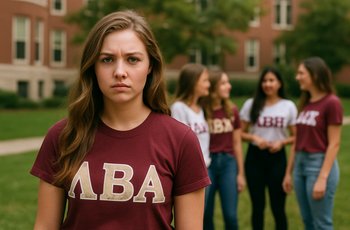

Spend five minutes around Greek life and you'll hear them. The whispered reputation rankings, the confident declarations about which sorority is full of what type of girl, the knowing looks when someone mentions a certain house. Stereotypes about sororities are basically a parallel institution at this point - as old as recruitment itself, and usually about as accurate as a game of telephone that's been running since 1985.
I'll be straight with you: I'm an IFC guy. I didn't go through sorority recruitment, I don't have inside knowledge of any chapter's internal culture, and I'm not claiming to speak for women in Greek life. But I've been around long enough - four years on a campus with a serious Panhellenic presence, plus the alumni network conversations that come after - to notice which stereotypes actually hold water and which ones get repeated because repetition feels like proof.
The Ones That Are Mostly Garbage
The big one people love to throw around: every sorority has a "type," and you either fit it or you don't. Kappa Kappa Gamma is for one kind of girl, Zeta Tau Alpha is for another, Alpha Chi Omega for another. There's always this very confident taxonomy that people lay out like they've done fieldwork. They haven't. What they've done is looked at Instagram, talked to three people, and confused a house's social reputation with its actual membership.
I've seen this play out badly. Girls who self-select out of rushing a chapter because of a rumor someone's older sister passed down, which was based on something that happened five years ago under completely different leadership. A chapter's culture turns over fast - faster than the reputation does. The Pi Beta Phi house that had a rough patch two recruitment cycles ago might have the most genuinely solid sisterhood on campus right now. You won't know that from the stereotypes, though.
Honestly, the "mean girls" stereotype might be the most unfair one. Every sorority gets called cliquey at some point. Some chapters absolutely earn that reputation - I'm not gonna pretend otherwise. But I've watched chapters like Delta Delta Delta and Alpha Phi put in serious philanthropic hours, run alumni mentorship programs that actually connect members to careers, and show up for each other in ways that have nothing to do with who's sitting at whose table at a social. The mean girl narrative flattens all of that.
And the "they all just party" take is tired. Every chapter I've seen up close has an academic chair, a philanthropy chair, a standards process - infrastructure that exists specifically to hold members accountable beyond the social calendar. Whether chapters use those structures seriously is a different conversation. But writing sororities off as party organizations ignores how much actual work goes into running a chapter of 80 to 150 women.
The Ones That Have Some Truth In Them
Here's the thing, though - some stereotypes exist for a reason. Not because they define every member, but because patterns emerge from cultures, and cultures are real.
The reputation hierarchy is real. On most campuses with a strong Panhellenic, there are chapters that carry prestige and chapters that are fighting for it. That hierarchy shapes rush dynamics, it shapes which chapters get certain partnership invitations from fraternities, and it creates genuine social pressure inside houses to maintain standing. Acting like that's not happening is its own kind of dishonesty.
Groupthink is also a documented thing in close-knit organizations - fraternities included, so I'm not throwing stones here. When you live with a group of people, share rituals, go through recruitment together, and build identity around membership, conformity pressure is real. Some chapters handle that better than others. The ones that actively recruit women with different backgrounds and perspectives tend to come out stronger. The ones that recruit for sameness often end up with a brittle culture that cracks under pressure.
The legacy advantage stereotype has enough real-world backing that it's hard to dismiss. Some chapters, particularly the historically prestigious ones at large SEC and ACC schools, do weight legacy status heavily. That's not a conspiracy theory - it's just a documented feature of how certain chapters operate. Sigma Chi guys talk about similar dynamics on the fraternity side. Organizations that have long institutional histories tend to protect those pipelines.
Why This Keeps Mattering
From where I sit, the stereotype problem in sorority life and fraternity life comes from the same root cause: people treat reputation as a shortcut for doing the actual work of knowing an organization. It's easier to repeat what you've heard than to walk into a chapter's philanthropy event, have a real conversation with members, or pay attention to which houses have alumni who actually stay connected and involved.
Brotherhood taught me that the chapters worth knowing are usually not the ones with the loudest reputation. The ones that last - the ones whose alumni still show up at chapter events decades later, whose traditions actually mean something - those chapters usually have cultures that didn't get built by chasing a stereotype. They got built by taking membership seriously.
I'd guess sorority life works the same way. The chapters that are doing the real work probably aren't the ones whose reputations are loudest in the rumor mill. They're the ones whose members come back for homecoming ten years out, still wearing letters, still talking about what those years meant.
Stereotypes are a lazy map of a complicated place. They'll tell you where the parties were five years ago and nothing about where the actual substance is now. If you're rushing, or if you're just trying to understand what's actually going on inside Panhellenic, start by questioning whatever you've already decided you know. You're probably at least half wrong - and the half you're wrong about might be the part that matters most.