
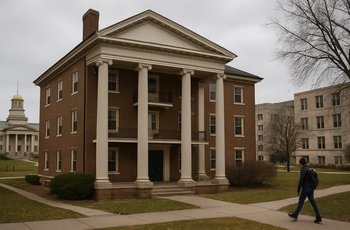
The University of Iowa is investigating multiple Greek chapters for potentially violating student organization policies. That's the headline. And if you've spent any real time inside Greek life, your first reaction probably wasn't shock - it was something closer to a tired, knowing exhale.
I'm not going to pretend I have all the details from the investigation, because the reporting is still thin on specifics. What we know is that chapters are under scrutiny, that university administration is involved, and that the phrase "student organization policies" is doing a lot of heavy lifting right now. But here's what I do know from four years inside a chapter: when investigations like this happen, they almost never come out of nowhere.
Investigations Don't Drop From the Sky
There's a version of this story where shocked Greek life members act like the administration is just out to get them. And look, universities and Greek councils have had a contentious relationship for decades - that part is real. But an investigation involving multiple chapters doesn't usually start because some administrator woke up and decided to go after Greek row. It starts because something happened. Or several things happened. Or someone talked.
During my time in a sorority, I watched our chapter get a warning from our national organization over something that felt minor from the inside but apparently looked terrible from the outside. The thing about being inside a chapter is that you develop this collective blind spot. Everyone around you thinks the thing is normal, so it starts to feel normal. That's not an excuse - it's just the honest mechanics of how group culture works, and how violations quietly compound over time.
Multiple chapters being investigated simultaneously is a different signal. That's not one chapter going rogue. That's a systemic problem on a single campus, and those are harder to fix because they usually point to a culture issue that cuts across councils, recruitment cycles, and leadership transitions.
The Policy Violation Framing Matters
"Violating student organization policies" is intentionally vague language, and I think it's worth paying attention to what that framing does and doesn't tell us. It's not hazing language, at least not explicitly. It's not criminal language. It's administrative language - which means we're probably looking at things like unregistered events, membership intake issues, financial irregularities, or hosting violations. Stuff that sounds boring until you realize it's usually the paper trail that leads to the bigger problems.
Honestly, the policy stuff matters more than people give it credit for. I used to roll my eyes at our chapter's compliance training. All those rules about registered events and advisor approval felt bureaucratic and pointless when I was a sophomore just trying to get through bid day without crying. But those structures exist because unstructured, unregistered activity is where chapters get into actual trouble. The policy is the guardrail. Ignoring the guardrail is rarely the whole problem - it's usually a symptom of a chapter that's already sliding somewhere it shouldn't be going.
Iowa's Greek community isn't uniquely broken. This kind of investigation has played out at schools across the country - big state schools, small private colleges, campuses that pride themselves on their Greek life culture and campuses where Greek life is barely hanging on. The common thread isn't geography or school size. It's chapters that lose sight of accountability because there's no internal culture demanding it.
What Happens to the Members Who Did Nothing Wrong
Here's the part nobody really talks about when these stories break. There are women and men in those Iowa chapters right now who had nothing to do with whatever triggered this investigation. They joined because they wanted community. They've been doing their part, going to meetings, keeping their grades up, showing up for sisterhood or brotherhood events that actually matter. And now they're carrying the weight of whatever their chapter's leadership or older members did or didn't do.
That's a genuinely hard position to be in. When your chapter is under scrutiny, it affects your reputation on campus. It affects your recruitment numbers. It can affect your chapter's standing with your national organization, which then affects everything from your housing to your programming budget. The ripple effects hit people who were completely uninvolved.
I'm not saying that's a reason to avoid accountability - chapters have to face consequences when they violate policies. But I think it's worth acknowledging that "the chapter" is not a monolith. It's two hundred people, or fifty people, with wildly different levels of knowledge about what was actually going on. The investigation is aimed at leadership and chapter-level decisions. The fallout lands on everyone.
What those uninvolved members do next actually matters a lot. The chapters that survive investigations and come out of them better are the ones where the non-culpable members don't go silent or defensive. They're the ones who push for real internal change instead of just waiting for the heat to die down so things can go back to normal. Going back to normal is exactly the wrong move when normal is what got you investigated.
This Won't Be the Last One
Iowa is not an outlier. I wish I could say it was. But until Greek chapters - sororities and fraternities both - build internal accountability structures that don't depend entirely on whether the current president happens to have good judgment, this cycle is gonna keep repeating. A strong president keeps the chapter in line. She graduates. The culture she built either holds or it doesn't, and often it doesn't, because culture that lives in one person isn't actually culture.
The chapters I've seen do it right - the ones that are still standing with their reputations intact and their membership engaged - have accountability baked into how they operate at every level. It's not about being perfect. It's about having a chapter where someone will actually say something when things start going sideways. Where the new members aren't afraid to ask questions. Where compliance isn't treated as a joke.
Whatever comes out of the University of Iowa investigation, the real question is what the chapters do with it. Not what they say publicly. What they actually do internally, when nobody is watching.