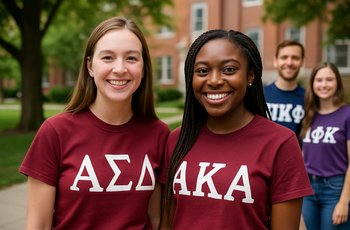

Every recruitment cycle, I watched the same thing happen from my seat on Panhellenic council. PNMs would walk into the first round of events wearing outfits so coordinated, so clearly researched, so obviously assembled for the specific purpose of impressing sorority women - and the effect was the opposite of what they intended. The members clocked it immediately. It reads as desperate, even when it isn't. And that perception, fair or not, follows you through the rest of the week.
I'm not saying this to be harsh. I'm saying it because nobody in an official capacity will tell you the truth about this. The Panhellenic recruitment guides are written to be neutral and encouraging. They're not going to say "stop trying so hard" in print. But behind closed doors, during preference round debriefs, chapters absolutely talked about which PNMs seemed genuine and which ones seemed like they were performing. Outfit was a piece of that conversation, whether it should be or not.
What "Trying Too Hard" Actually Looks Like
Here's the thing - it's not about wearing nice clothes. Wearing nice clothes is correct. It's about the specific signals that give away that you did three hours of TikTok research before showing up. The matching set in the sorority's exact colors. The brand-new white sneakers that have clearly never been worn before that morning. The blazer that fits perfectly but looks like it was purchased specifically for this event and probably was. These things individually are fine. Stacked together, they create a look that screams "I calculated this."
The chapters that had the most selective processes - your Kappa Kappa Gammas, your Pi Beta Phis, your Alpha Chi Omegas at competitive schools - their members were genuinely good at reading people. They spent a week doing it. When someone walks in looking like they dressed for a job interview at a sorority rather than just, you know, themselves, it raises a question. Who are you when you're not in recruitment?
That question matters more than people realize. Retention is a real problem for chapters and Panhellenic councils alike. Members who joined based on a performance - their own or the chapter's - often don't stick around past initiation. The chapters that figured this out were looking for fit, not presentation.
The Actual Guidelines Nobody Talks About
Panhellenic recruitment rules typically dictate what chapters can and can't say or do during structured rounds. What they don't regulate is what PNMs wear, obviously. But the framing matters here. The rule structure is designed to create a level playing field - same number of rounds, same time limits, same no-gifts policy. The intent is to reduce the influence of wealth and connections on outcomes.
Outfit choices are one of the places where that intent quietly breaks down. A PNM who can afford the "right" recruitment wardrobe has a visible advantage in first impressions over someone who doesn't know the unwritten dress code or can't afford to participate in it. I've raised this in council meetings. It went nowhere, because honestly, nobody knows how to write a rule about it. But it's worth naming.
What this means practically: you're not trying to hit some secret dress code that only insiders know. You're trying to look like a version of yourself that's put-together but not costumed. There's a difference.
What Actually Works
Honestly, the PNMs who made the best impressions in events I observed were not the most dressed-up ones. They were the ones who looked comfortable. A simple sundress that fits well. Clean jeans with a nice top. Something that didn't require constant adjustment or seemed chosen to impress a specific aesthetic.
A few things that hold up across most recruitment contexts:
- Wear shoes you can actually walk in. Philanthropy round and multi-house days involve a lot of walking. Nothing kills your conversation energy like managing uncomfortable shoes the whole time.
- Avoid anything with Greek letters from another organization unless you're a legacy and it genuinely makes sense. It's a weird flex and it doesn't read the way people think it does.
- Patterns and color are fine - just make sure they're yours, not chosen because you researched the chapter's aesthetic on Instagram.
- Dress for the round. Open house rounds are more casual. Preference rounds are more formal. Read the guidance your school's Panhellenic office puts out - they do actually tell you this, you just have to read the emails.
Preference round is where I'd say to elevate your look intentionally. That round is smaller, more personal, and more emotional. A slightly more formal outfit signals that you take it seriously, which you should, because at that point chapters are genuinely considering you. But even then, there's a ceiling. You're not going to a gala. You're having a real conversation about whether this is a good fit - for you and for them.
The PNMs who came in looking like themselves and then had a real conversation - those were the ones chapters remembered. Not the ones with the most impressive recruitment wardrobe.
Look, Panhellenic councils spend a lot of energy making sure the recruitment process is fair and structured. The bid matching system, the mutual selection process, the rules around contact - all of it is designed to get to a real outcome. What you wear can't substitute for actually connecting with people in the room. And kinda ironically, the more you dress to perform, the less space there is for that connection to happen.
The chapters you'd actually want to join are gonna see through the outfit anyway. So wear something you feel good in, make sure it fits the tone of the event, and then stop thinking about it. The conversation is what counts.