
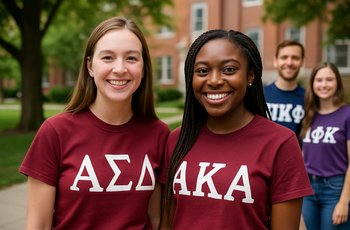
So Alma College just put out a story about how their fraternities and sororities are outperforming the general student population academically. And I know exactly what most people's first reaction is. Eye roll. Skepticism. Some version of "yeah right, those guys study." I get it. I lived it. But here's the thing - the data is real, and it's worth actually talking about instead of dismissing it like we always do.
Alma is a small liberal arts school in Michigan, which already changes the context a little. Small schools hit different when it comes to Greek life. The chapters are tighter, the campus is smaller, everyone knows everyone, and there's genuinely nowhere to hide if your chapter is tanking its GPA. At a Big Ten school you can kind of disappear into the crowd. At a place like Alma, if your fraternity has a bad semester academically, the whole campus knows about it by Tuesday.
The Part Nobody Wants to Credit
Greek organizations have always had academic requirements built into their structure. Minimum GPA to stay active, study hours for new members, academic chairs who track everyone's grades. When I was a brother, we had mandatory study hours in the library on Sunday nights. Did everyone take it seriously at first? Absolutely not. But over time, something weird happened - it actually worked. You're sitting in a room with your brothers, everyone has their laptop open, and the social pressure to not be the guy failing his classes becomes genuinely real.
That's not a small thing. That's a structural accountability system that most college students just don't have. Your random roommate in the dorms isn't checking on your GPA. Your academic advisor sees you twice a semester for fifteen minutes. But your chapter? They know. And more importantly, your academic chair knows, your president knows, and depending on your nationals, your whole chapter can face consequences if enough members slip below the minimum.
Alma's story is highlighting exactly this kind of internal structure working the way it's supposed to. That's not luck. That's chapters doing their jobs.
Why This Story Gets Buried Every Time
Here's something I noticed in four years of Greek life - the bad stories travel at the speed of Twitter and the good stories barely make it past the college's own news page. A fraternity gets suspended somewhere and it's national coverage. A chapter posts the highest GPA on campus and it gets a two-paragraph blurb that twelve people read.
That imbalance shapes public perception in a real way. Parents hear the horror stories. University administrators hear the horror stories. Incoming freshmen hear the horror stories. And then they're shocked when they actually join and discover that a lot of chapters are genuinely trying to build something worth being part of - academics included.
I'm not saying Greek life gets to hide behind its good stats while ignoring real problems. That would be a bad argument and I know it. But pretending the academic side of Greek organizations doesn't exist - or is just a PR move - is equally lazy thinking.
What Alma Is Actually Modeling
Small schools with strong Greek communities tend to produce this kind of outcome more consistently, and I think there are a few real reasons for that. First, the chapters are more invested in each member because they can't afford to lose people. A fraternity with 25 guys can't absorb a bunch of academic suspensions without it visibly gutting the chapter. So they actually follow up. They check in. They connect struggling members with tutors or resources early instead of waiting until someone is already failing out.
Second, faculty relationships at small schools are different. Professors know your chapter. Some of them were in Greek organizations themselves. That connection makes it easier to walk into office hours, easier to ask for help, and honestly easier to feel like you belong on campus academically as well as socially.
Third - and this one sounds simple but it matters - chapters that make academics part of their identity attract members who care about academics. Recruitment is a two-way filter. Chapters known for strong GPA numbers tend to attract PNMs who want that. It compounds over time.
None of this is magic. It's just organizations functioning the way they're designed to function.
I had a brother in my chapter who was kinda coasting his sophomore year, skipping class, not really engaging. His grades slipped below the chapter minimum. And our academic chair - a junior who took the role way more seriously than anyone expected - sat down with him, figured out what was going on, connected him with campus resources, and checked in every two weeks. That guy graduated on time with a decent GPA and a job lined up. I'm not convinced that happens in a vacuum without the chapter structure around him.
Alma's fraternities and sororities are doing what Greek organizations are actually supposed to do. And it's gonna keep not making national headlines, which is a shame. The stories that prove the model can work deserve the same attention as the stories that prove it failed.