
Every fall, thousands of women walk into Panhellenic recruitment with no idea what's actually happening behind the scenes. They see the matching outfits, the chants, the doors swinging open with smiling faces. What they don't see is the months of planning, the hours of conversation chapter members have about values and fit, and the institutional weight that holds the whole thing together. Rider University's National Panhellenic Conference recruitment coverage gave me a reason to think about all of that again - and honestly, it reminded me why Panhellenic structures matter more than people give them credit for.
The Rider News piece takes a look inside how NPC recruitment actually functions at a smaller university. And what strikes me reading it isn't the pageantry. It's the seriousness of it. Panhellenic recruitment - real recruitment - is a process built on a framework that most outsiders assume is just organized socializing. It's not. There are rules, timelines, quota systems, and a whole governance structure making sure chapters aren't just grabbing whoever they want whenever they want. That structure exists for a reason.
Small Schools Do This Differently
Here's the thing about Greek life at a school like Rider versus what you see at a flagship SEC campus - the scale changes everything about how the process feels. At a big state school, Panhellenic recruitment can feel like a machine. Thousands of potential new members, dozens of events, chapters with 200-plus active members running back-to-back conversations all day for a week straight. It's impressive and kind of overwhelming at the same time.
At a smaller school, recruitment is more personal. It has to be. The chapters are smaller, the pool of potential members is smaller, and the conversations go deeper faster. That's not a knock on big-school recruitment - I've seen it work beautifully. But there's something at a school like Rider where every woman going through the process is genuinely getting face time with the people who might become her sisters, not just cycling through a rotation so fast that nobody remembers her name by round three.
That matters. The whole point of the recruitment process - whether you're on the IFC side watching it happen or you're a Panhellenic member living it - is genuine connection. Fit. The idea that you're not just filling a quota but actually finding people who belong in your chapter. When that works, it works. When it's just a numbers game, everyone loses.
What Panhellenic Gets Right That We Don't Always Acknowledge
I'll be real with you. From an IFC perspective, we don't always appreciate how structured and intentional NPC recruitment actually is. We do our own thing - open recruitment, continuous open bidding, informal stuff that sometimes devolves into chaos - and we look at formal Panhellenic recruitment from a distance and kind of wonder what all the ceremony is about.
But the ceremony is infrastructure. It's accountability. The National Panhellenic Conference has rules about when chapters can contact potential new members, what can be said, how bids are extended. That's not bureaucracy for the sake of it. That's an organization trying to keep the process fair across chapters of wildly different sizes and resources. A chapter with deep alumni pockets and a beautiful house has a natural advantage. The recruitment rules exist to make sure that advantage doesn't just completely steamroll everything else.
Fraternities could learn from some of this. I'm not saying we should run formal recruitment the same way - our process works differently and that's fine. But the intentionality behind Panhellenic recruitment is something worth respecting. The women going through it at Rider this year aren't just going to parties. They're making decisions about organizations that will shape who they are for the next four years and, honestly, long after that.
The Part Nobody Talks About Enough
What the Rider News coverage gestures at - even if it doesn't say it outright - is how much the recruitment process depends on the people running it. Panhellenic councils are run by students. Chapter recruitment chairs are students. The women sitting in those rooms having conversations with potential new members are students balancing classes and jobs and everything else that comes with college. And they're being asked to make decisions that will define their chapter's culture for years.
That's a real responsibility. And when it's done with the kind of care and structure that formal NPC recruitment demands, it reflects something genuine about what these organizations are trying to be. Not just social clubs. Not just housing. Something with values and standards and an expectation that the people joining have thought about what they're walking into.
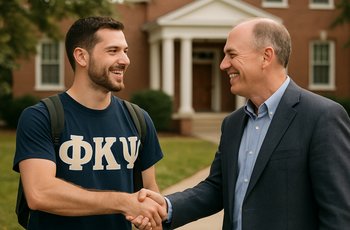
I think about my own pledge process - the conversations I had with brothers before I joined, the moments where I realized this wasn't just about hanging out but about committing to something that had been going on longer than I'd been alive. That's what Greek life is supposed to feel like. And from what I can tell reading about Rider's recruitment, that's the feeling they're chasing too.
It doesn't always work perfectly. Recruitment is messy and human and sometimes the best person in the room goes home without a bid and that's genuinely painful. But the fact that schools like Rider are running this process with real structure, real Panhellenic oversight, and real intention - that's not nothing. That's actually the whole thing.