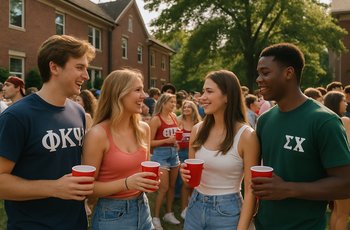
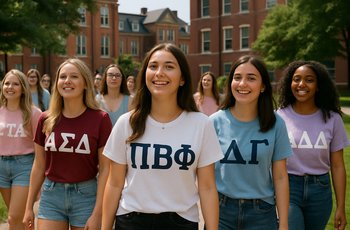
West Virginia's Panhellenic recruitment just hit its highest participation numbers since 2014. Let that settle for a second - because that's not a small thing. That's a decade of declining or stagnant numbers finally reversing course, and it happened at a school where Greek life has faced the same headwinds every other campus has dealt with. This matters. A lot.
I'll be honest: I've been watching Panhellenic trends closely for a while now, partly because what happens on the sorority side of Greek life almost always predicts what's coming for fraternities. When women's recruitment surges, bid day energy lifts the whole campus. New member classes in sororities bring new social capital, new connections, new reasons for the whole Greek community to function better. It's not a coincidence. It's an ecosystem.
Why This Number Actually Means Something
2014 feels like a completely different era of Greek life. That was before the national conversation about hazing reform really intensified, before a string of high-profile suspensions made every university's Greek affairs office jumpy, before COVID wiped out two consecutive recruitment cycles and left chapters scrambling to rebuild. The fact that Panhellenic at West Virginia climbed back to those pre-all-that numbers is genuinely impressive.
And it's not like women just showed up by accident. Chapters put in work. Recruitment chairs lost sleep. Standards committees argued over values-based talking points until everyone in the room wanted to quit. That process is brutal and tedious and honestly underappreciated by everyone who doesn't run it. So when the numbers come back like this, it means the work paid off.
What I keep thinking about is what those new members are actually walking into. Because recruitment numbers are only the beginning of the story. A big bid day class means nothing if retention drops off by spring. The real question - always - is whether chapters can deliver on what they promised during recruitment. That's where most chapters quietly struggle.
The Part Nobody Talks About After Bid Day
Here's the thing about a surge in recruitment: it puts pressure on everything downstream. Chapters that were built for 80 actives suddenly have to absorb 30 new members in a single class. Big sister programs get stretched thin. Chapter officers who were barely keeping things running with a smaller group now have to scale fast. And the traditions - the stuff that actually makes Greek life worth it - those can get diluted when growth happens faster than the culture can absorb it.
I've seen it happen on the fraternity side too. A chapter recruits a massive pledge class, everyone celebrates, and then by the following fall half those guys have dropped because nobody made them feel like they actually belonged to something. Kappa Sigma, Sigma Chi, Alpha Epsilon Pi - any chapter can fall into this trap regardless of tier. Size without substance doesn't hold.
Panhellenic chapters like Zeta Tau Alpha or Pi Beta Phi or Delta Delta Delta have deep institutional knowledge about member development, but that knowledge only transfers if the older members actually show up for it. And when you're riding a recruitment high, it's easy to get complacent. The chapter feels good. The numbers look good. And then someone cuts corners on the onboarding process because things feel like they're working.
They're not always working. They just look like they are.
What This Means for Greek Life Broadly
I think we're in a genuine moment of recovery for Greek life, not just at West Virginia but at a lot of schools. The narrative that Greek organizations were dying never really held up to scrutiny - I've said that before and I'll keep saying it - but there's a difference between surviving and actually growing. This recruitment cycle at WVU looks like growth.
And honestly, the timing matters. There's been real cultural pressure on Greek organizations from every direction for years. Universities tightening oversight, national organizations pulling charters, local media covering every conduct violation like it's a federal case. Against all of that, Panhellenic at West Virginia ran recruitment and came back with numbers that would have looked strong even a decade ago. That's not luck. That's chapters that maintained their value proposition through a genuinely hard stretch.
What's the value proposition? It's not parties. It's not the Instagram aesthetic. It's the thing that's always been the actual core of Greek life - belonging to something with history, with ritual, with people who are gonna show up for you when things get hard. Recruitment works when chapters can communicate that authentically. It fails when chapters try to dress up surface-level appeal as something deeper than it is.
The women who went through recruitment at West Virginia this cycle made a real decision. They looked at their options, they sat through rounds, they felt something - or didn't - during conversations with actives. And enough of them felt something to push the numbers to a ten-year high. That means Panhellenic chapters there are doing something right in how they represent themselves.
Now comes the harder part. Keeping those women, making them believers, giving them the kind of experience that makes them call their chapter sisters ten years from now when something in their life cracks open. That's the job. Recruitment is just the door. Everything after it is where Greek life either earns its reputation or doesn't.
West Virginia's Panhellenic should be proud of this number. But pride isn't a retention strategy.