Somewhere between 2018 and now, Greek life stopped being something that mostly existed on campus and started existing everywhere. Your parents could see it. Your high school friends in different states could see it. Random people with no connection to your school could see it. And if you were in a chapter during that shift, you felt it in ways that were genuinely weird to process in real time.
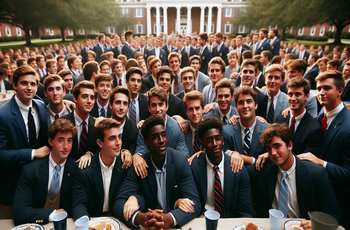
I graduated in 2024. I was in a chapter for four years. I watched us go from posting the occasional blurry tailgate photo to having an actual content strategy - not because anyone told us to, but because the pressure to look like we were thriving kind of just... built itself. And that's a strange thing to realize you participated in.
The Part That Actually Helped
Okay, credit where it's due. Social media made recruitment dramatically better for guys who weren't already plugged into the Greek network before they got to campus. When I went through rush, I could look up chapters, see what events they did, get a feel for the vibe, and figure out which houses were actually worth my time. That used to require knowing the right people. Now you just need Wi-Fi.
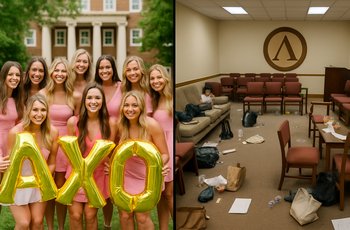
For sororities especially, recruitment videos became a real window into chapter culture in a way that pamphlets and campus visits never were. Alpha Chi Omega at one school might look and feel completely different from Alpha Chi Omega at another, and you can actually tell that now. That's not nothing. It helps people find their people faster.
Philanthropy got a boost too. Chapters that were doing genuinely good work - Zeta Tau Alpha's breast cancer awareness stuff, Pi Beta Phi's literacy programs - started getting actual reach beyond their immediate campus. Sigma Chi raised more for its Derby Days philanthropy when chapters started posting about it consistently. That's real money going to real causes, and social media is part of why it happened.
And honestly, there's something to be said for accountability. When chapters knew their behavior could end up filmed and posted in 20 minutes, some of the worst stuff got dialed back. Not all of it. But some.
The Part That Quietly Made Things Worse
Here's the thing nobody really talks about: social media didn't just show Greek life, it started shaping it. And that's a different problem.
I've seen chapters plan events around what would photograph well. Not around what would actually be fun or meaningful - around what would look right on a grid. That's a weird inversion of priorities that happened so gradually that most people didn't notice it happening to them. You stop asking "will this be a good time?" and start asking "will this perform?" Those aren't the same question.
Bid day is the clearest example. Bid day used to be chaotic and fun in a genuinely unpolished way. Now some chapters treat it like a production. Someone's got a ring light. Someone coordinated the outfits. There's a photographer. The whole thing gets packaged and posted before the new members have even met half the chapter. I'm not saying that's evil, but something got lost somewhere in there.
Ranking culture got turbocharged too. GreekRank has existed for a while, but when reviews and rankings started getting shared on social media, the reputational stakes around them jumped. Chapters that were kinda insecure before got way more so. The scramble to be seen as "top tier" became more intense, more public, and weirdly more stressful - for members who didn't ask to be part of a brand.
And then there's the comparison problem. When you can scroll through what Kappa Sigma looks like at a school three states away, or see what Delta Delta Delta is doing at a school with twice your chapter's budget, your own chapter starts to feel like it's falling short in ways that aren't even real. It's the same algorithm problem everyone has with their personal feeds, just applied to an organization you care deeply about. That combination hits different.
The Reputation Machine Nobody Asked For
One specific thing changed that I don't think gets enough attention: how fast reputational damage spreads now. A chapter that does something genuinely bad - hazing, discrimination, anything that crosses a real line - should face consequences. I'm not arguing against that.
But chapters also face consequences now for things that look bad out of context, for screenshots that went around without explanation, for a single member's post being attributed to the whole organization. The speed is the issue. A chapter that might have had a week to respond and explain in 2010 has about four hours now before the narrative is set. That's changed how chapters communicate internally, how risk management conversations happen, how leadership thinks about anything that touches public perception.
Some chapters handled that pressure by getting more organized and more thoughtful about what they put out. Good for them. A lot of chapters responded by becoming more guarded, more performative, more interested in optics than substance. The social media version of the chapter and the actual lived experience inside it started to diverge - and nobody really talks about what that does to members who feel like they're supposed to perform belonging rather than just have it.
I loved my four years. I'd do it again without question. But if I'm being straight with you, my chapter was a better place in the moments nobody was filming it. The best conversations, the real brotherhood stuff, the things I actually remember - none of it ended up online. And I wonder sometimes if that's the thing that keeps getting squeezed out as chapters spend more energy on the version of themselves that exists on a screen.