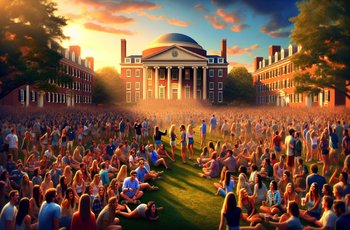

Every chapter has a Founders Day on the calendar. Most of them treat it like a mandatory dinner where someone reads from a laminated card and everyone claps at the right moments. I watched that happen three years in a row before my chapter finally did it right, and the difference was not subtle. It was the kind of night where guys who barely talked to each other ended up having actual conversations about why they joined in the first place. That does not happen by accident, and it does not happen because you booked a nice venue.
Here's the thing - Founders Day has the potential to be the single most culture-defining event a chapter runs all year. Not rush. Not homecoming. Not the philanthropies everyone speed-runs to hit their hours. Founders Day, done well, can actually answer the question of why any of this matters. Done badly, it's just a dress code and a headcount.
What It's Actually Supposed to Do
When Sigma Chi or Kappa Sigma or any chapter traces its founding back to a small group of guys in a dorm room or a borrowed parlor, there's a real story there. Not a myth, not a brand - an actual story about people who wanted something that didn't exist yet and built it. That story is the whole point of Founders Day. The ritual, the formal recognition, the alumni showing up in their blazers - all of it is supposed to connect the current chapter to that original moment.
Most chapters skip that part. They get the location, the catering, the executive board speeches. They check the boxes. But the story never actually lands because nobody bothered to tell it in a way that means something. I sat through a Founders Day my sophomore year where the chapter president read a biography of the founding members so fast it sounded like a stock disclaimer. Nobody remembered a word of it by the next morning.
The chapters that get it right - and I've seen a few - do something different. They tie the founding story to something specific happening in the chapter right now. A member who just overcame something. A class of new initiates that almost didn't happen. A moment in the semester where things got hard and the brotherhood held together anyway. That connection is what makes history feel alive instead of archived.
Alumni Presence Changes Everything
I cannot overstate how much it matters when older alumni actually show up for Founders Day - not just the guys who graduated two years ago, but the ones from the 90s and earlier who still care enough to drive in. My senior year, we had a guy show up who had been initiated in 1987. He sat at dinner between two current members, and within twenty minutes he was telling a story about a chapter crisis that almost led to a suspension back in his day. Everyone at that table was locked in.
That moment did more for chapter culture than any retreat or team-building exercise we ever ran. Because it made clear that the chapter had a real history - one that included hard times, not just trophies. New members especially need that. They tend to assume the chapter has always been exactly what they see, which is a kind of dangerous innocence. Hearing from an alum that there were years where things were rough, and the chapter made it through, reframes what it means to be a part of something ongoing.
Getting alumni there is on the chapter. Not on the national organization. Not on the IFC. That means making actual phone calls, not just mass emails. It means giving people enough lead time. It means creating a program worth showing up for. A lot of chapters complain about alumni being disengaged, but they've never given alumni a reason to engage that wasn't about money.
The Culture Problem Hidden in Plain Sight
Chapters that skip Founders Day or treat it like an obligation tend to have a specific kind of culture problem - one where nothing feels permanent. Members think in semesters. Nobody knows the chapter history past four years ago. Ritual feels like theater. Brotherhood becomes mostly about proximity and convenience rather than anything shared.
Honestly, you can diagnose a lot about a chapter by how it treats Founders Day. A chapter that puts genuine effort into it - real planning, real storytelling, real reflection - is usually a chapter that takes its own identity seriously. A chapter that mails it in is usually one where leadership turns over every year without anyone asking what they're actually carrying forward.
I watched a Delta Tau Delta chapter at a school near mine lose recognition partly because its internal culture had completely hollowed out. Nobody could tell you what the chapter stood for. Nobody knew the founding story. Founders Day was a formality. That is not a coincidence. When a chapter stops caring about where it came from, it tends to lose the thread of where it's going too.
Pi Kappa Alpha chapters, Sigma Alpha Epsilon chapters, Alpha Tau Omega chapters - some of them run incredibly meaningful Founders Day events that their members still talk about years later. Others have events that are kinda indistinguishable from an awkward family dinner. The difference is not budget. It's whether anyone in leadership actually believes the history matters.
Making It Mean Something
If you're running your chapter's Founders Day this year, a few things that actually work - and I know because I watched them work firsthand.
- Have a member or an alum tell a personal story about what the chapter meant to them during a hard moment. Not a speech. A story.
- Read the names of founding members out loud, and have someone briefly explain who they were as people - not just their dates.
- Make space for new members to ask questions. Founders Day should not be a lecture they sit through.
- If you have archived chapter records or photos, put them somewhere people can actually look at them during the event.
- Bring in at least one alum who is genuinely old guard - someone with perspective that stretches back further than anyone in the room.
None of that is complicated. But it requires someone to care enough to plan it that way instead of defaulting to the template from last year's exec board.
The chapters that have strong culture in 2024 are not the ones with the biggest houses or the best rush numbers. They're the ones where members actually know what they're part of. Founders Day - real Founders Day - is one of the few moments each year where a chapter has a legitimate shot at teaching that.