
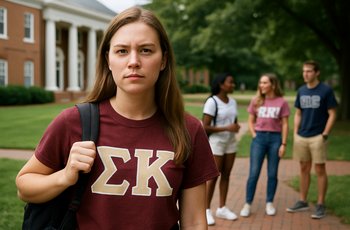
Elon University just dropped its annual Greek life achievement roundup, and honestly, it reads the way these things always read - a polished list of awards, GPA numbers, community service hours, and photo-ready moments that make the whole system look like it's running perfectly. And look, I don't say that to be cynical. Some of it is genuinely earned. But having sat on a Panhellenic council and watched how these annual reports get assembled, I have thoughts about what they actually tell us versus what they leave out.
The Elon story celebrates a full year of achievement across their fraternity and sorority community. Chapters hitting academic benchmarks. Service milestones. Leadership recognition. It's the kind of coverage Greek life organizations are desperate for right now, especially when the national narrative keeps defaulting to hazing scandals and suspension orders. So I get why Elon's Office of Fraternity and Sorority Life published this. It's useful. It's not wrong. But it's also not the whole picture, and that gap is worth talking about.
What These Annual Celebrations Are Actually For
Here's the thing about end-of-year achievement reports - they serve a specific institutional function. They're not written for current members. They're written for parents, university administrators, alumni donors, and prospective students who are still forming opinions about whether Greek life is worth joining. That's the actual audience. And when you understand that, the framing makes a lot more sense.
When I was on council, we'd spend real time in the spring putting together exactly this kind of summary. Compiling philanthropic totals, pulling chapter GPA rankings, documenting which chapters had improved their standing since the previous year. The goal wasn't internal reflection. It was external positioning. Because Greek organizations at every school are always, always making a case for their own continued existence to somebody. And Elon is no different.
That's not a criticism of Elon specifically. It's just what this genre of announcement is. The chapters that are genuinely thriving deserve recognition. But recognition and accountability are two different functions, and annual celebration pieces only do one of them.
The Numbers Tell You a Fraction of the Story
GPA benchmarks are the easiest metric to point to, and they're also the most manipulated - not in a fraudulent way, but in a structural way. Chapters game minimum GPA requirements all the time through study hours policies, academic chairs who are actually doing their jobs, and selective new member intake. A chapter that recruits pre-med women with 3.8s is going to post strong academic numbers regardless of what culture it's actually running. The number looks good. It doesn't mean the chapter is healthy.
Service hours have the same problem. I've sat in standards meetings where chapters were padding their service totals to hit council requirements or meet national organization thresholds. Some of it was genuine. Some of it was making sure a chapter event counted as philanthropy even when it was a stretch. The total hours don't tell you whether the membership actually cares about the cause or whether they needed the credit.
None of this means Elon's numbers are inflated. I'm not saying that. I'm saying that when a university publishes a celebration piece built around aggregate statistics, you're getting a summary of outputs, not an assessment of organizational health. Those are different things.
When the System Actually Works
Okay, I want to be fair here, because I do think Elon's Greek community has done real work. A year of achievement doesn't happen by accident, and the advisors and chapter officers who drove those numbers put in actual time. Council-level collaboration on recruitment, standards enforcement, shared programming - that stuff is hard and it mostly happens invisibly. Nobody writes a headline about the Panhellenic VP of Standards spending three weeks working through a chapter compliance issue before it became a formal hearing.
The broader trend Elon is part of is real. A lot of Greek communities came out of the post-pandemic reset with a chance to rebuild from scratch, and some of them took it seriously. Smaller recruitment classes that were more intentional. Chapters that restructured their new member education because the old version wasn't defensible anymore. Advisors who pushed back on national organizations when their programming was outdated or harmful. That work shows up eventually in GPA numbers and service totals, even if the story behind it is more complicated.
Elon's community is mid-sized, which actually matters. Smaller Panhellenic councils tend to have tighter relationships between chapters, which makes collaborative programming more realistic and makes standards enforcement feel less adversarial. When you're running a council with four chapters instead of twelve, the chapter presidents actually know each other. That changes how conflict gets resolved and how shared goals get built.
What I'd Want to See Instead
I'd be a lot more impressed by an achievement announcement that included something honest alongside the wins. Which chapters had to work through a probationary period this year and came out the other side? Which programs failed and got scrapped? What did the council actually disagree about before reaching consensus?
Those stories are never in the press release. And I understand why - they're politically complicated, they require chapter buy-in to disclose, and they give critics ammunition. But they're also the stories that would actually convince a skeptic that the system is capable of honest self-assessment. Right now, these annual reports read like a LinkedIn profile. Everything is a success. Everything is upward. Nothing was hard.
Greek life at schools like Elon is genuinely trying, in a lot of cases. The people running these councils are putting in real hours for zero compensation and a lot of grief. The chapter officers managing academic programs and philanthropy events are doing it on top of full course loads. That deserves acknowledgment. But the way these achievement pieces are written, you'd think the whole thing runs on goodwill and enthusiasm with no friction and no failure. And anyone who's actually been inside a Panhellenic council knows that's not how any of this works.
So yes, congratulations to Elon's Greek community on a strong year. The numbers are real and the effort behind them is real. But the press release version of Greek life isn't the same as the actual version - and we should probably stop pretending the gap doesn't exist.