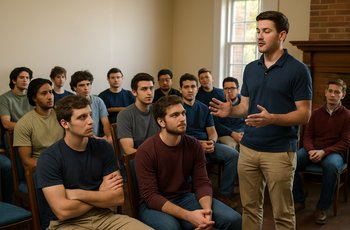

Cornell's president just put Greek life on notice in a way that's hard to dismiss. According to CBS News, Cornell's president said Greek life should end permanently if it can't be proven safe. Not suspended. Not restructured. Permanently ended. That's not a threat you make to sound tough at a press conference - that's a statement of actual intent, and every Greek organization on that campus should be taking it seriously.
I graduated in 2023. I spent four years in a sorority and I loved most of it. I also watched chapters around me make decisions that were embarrassing at best and genuinely dangerous at worst. So when a university president says the word "permanently," I don't roll my eyes. I listen. Because that word doesn't come out unless administrators have already had a lot of internal conversations about whether the whole thing is worth it.
What "Permanent" Actually Means
Here's the thing about university threats to Greek life - most of them aren't real. A chapter gets suspended for a semester, lays low, recolonizes, and everything goes back to normal within two years. Students have watched this cycle play out so many times that the institutional threats barely register anymore. Chapters know the pattern. Alumni know the pattern. Even administrators know the pattern.
But "permanent" is a different word. It means Cornell's administration is - at least publicly - positioning itself to break the cycle. Whether they actually follow through is another question. The political and financial pressure from alumni donors, national organizations, and students who rushed in good faith makes permanent elimination genuinely complicated. But the fact that the president is using that word at all signals something has shifted in how the university thinks about its liability here.
And liability is really what this is about. Universities have been watching lawsuits and federal scrutiny pile up across the country, and at some point the calculus changes. Greek life starts looking less like a valued tradition and more like a risk management problem that keeps getting worse.
The Chapters That Should Be Worried
Let me be direct: if your chapter is operating cleanly - if you're actually doing the stuff you put in your recruitment pitch, holding each other accountable, treating new members like human beings - you shouldn't be panicking right now. You should be frustrated, because the chapters that cut corners are the ones who put everyone else's existence at risk.
That's always how it works. One chapter in a system behaves badly, and every Delta Delta Delta or Zeta Tau Alpha or Pi Beta Phi on campus ends up in the news story by association. It's not fair. It's also completely predictable, and the chapters that have been looking the other way at other organizations' problems share some of the blame for that.
Panhellenic and IFC systems have historically been pretty reluctant to police each other. There's a kind of unspoken agreement that you don't call out another house because someday they might be in a position to call you out. That mutual protection instinct made sense when the stakes were social. It makes no sense when the stakes are whether Greek life exists at your university.
If you're on Cornell's campus right now and you're in a chapter that knows something is wrong - a ritual that goes too far, expectations placed on new members that nobody would defend in daylight - this is the moment to fix it. Not because administration is watching. Because someone could get hurt, and you'd have to live with that.
What This Looks Like From the Outside
I want to push back on one thing, though. There's a version of this story where the takeaway is that Greek life is fundamentally broken and universities should just be done with it. I don't actually believe that, and I don't think the evidence supports it.
What the evidence supports is that some chapters, at some schools, have created cultures where bad things happen and nobody says anything. That's a governance problem and a culture problem. It's not proof that the entire model is rotten.
The chapters I knew that functioned well had a few things in common. Strong alumni involvement - not the kind that parties with the actives, but the kind that shows up to chapter meetings occasionally and actually asks questions. Leadership that was willing to be unpopular. New member education that treated pledges like future sisters instead of people who needed to earn their place through misery.
None of that is complicated. It's just hard to maintain when there's social pressure in the other direction, and when the national organization is more focused on brand protection than on what's actually happening in the chapter house.
Cornell's president is essentially asking: can Greek organizations govern themselves? That's a fair question. The honest answer, looking across the system nationally, is "sometimes." Some chapters absolutely can. Others have demonstrated repeatedly that they can't - or won't.
The ones who can't are gonna take the whole thing down with them if the people who can don't start treating that as their problem too.