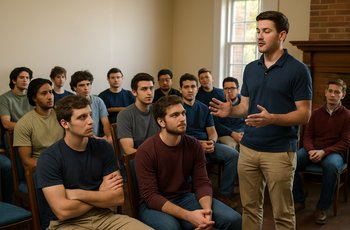

When I was a GDI freshman, I used to walk past the fraternity houses on a Friday night and assume I understood exactly what was happening inside. Loud music, zero oversight, total chaos. That was my mental model. Then I joined a chapter sophomore year and realized the actual experience was way more regulated than anything I'd imagined - and honestly, way more interesting to think about.
Campus event policies have tightened significantly at most schools over the past several years. Guest lists, sober monitors, registered events with university approval, third-party vendor requirements for certain functions. Some chapters have pushed back hard against these changes. Others adapted quietly. And the result is a Greek social scene that looks pretty different from what it did even five or six years ago.
What the Policy Shift Actually Looks Like on the Ground
At my school, registered social events now require chapter officers to submit a guest list in advance, designate at least two sober monitors per event, and in some cases coordinate directly with campus Greek life staff. Mixers with sororities - groups like Zeta Tau Alpha or Alpha Chi Omega - have to go through a shared approval process between both chapters. That's not nothing. That's a real administrative layer that didn't exist a decade ago.
Some of my friends who went Greek at smaller schools tell me it varies wildly by institution. At bigger SEC or Big Ten schools, chapters sometimes have more structural infrastructure to handle compliance. Smaller chapters at regional schools are often doing this with volunteers and a chapter president who also has a biochem midterm that week. The burden isn't equally distributed, and that matters when you're evaluating whether these policies are actually working.
Honestly, my first reaction to all of it was skepticism. It felt like performative bureaucracy - boxes to check so the university could say it did something. And some of it probably is that. But I've changed my view slightly, and here's why.
The Compliance Requirement Changed the Conversation Inside Chapters
This is the part that surprised me. When event registration became mandatory, it forced chapters to actually talk through their social plans in a more structured way. Before an event gets submitted for approval, there's usually a chapter-level conversation about the guest list, the setup, who's responsible for what. That conversation didn't always happen before.
Sigma Alpha Epsilon chapters at several schools have written about restructuring their social programming in direct response to university pressure after various incidents over the years. Sigma Chi and Kappa Sigma chapters have done similar. And look, some of that is PR damage control. But some of it is genuine internal culture change driven by people in the chapter who were already uncomfortable with the old model and now had policy as a reason to push for something different.
I've seen that dynamic firsthand. Someone in your chapter who wants to pump the brakes on something has a lot more leverage when they can point to a university policy. It changes the internal politics in a way that's hard to quantify but real.
The counterargument - and it's a fair one - is that chapters that want to operate badly will just do it off the books. Move things off campus, don't register the event, avoid official channels entirely. Unrecognized fraternities have done this for years. So stricter policy compliance for recognized chapters might just be pushing certain behaviors into less visible, less accountable spaces. That's a legitimate concern and I don't think Greek life or universities have fully answered it.
What's Actually Been Lost and What Hasn't
There's a version of this conversation that's all nostalgia - people mourning a social scene that was more spontaneous, less supervised, more whatever they imagined it to be. I get that. But I also think some of what supposedly got lost wasn't worth keeping.
What I do think is worth acknowledging is that smaller, informal events have gotten relatively more important as a result of all this. When a large registered mixer requires weeks of planning and paperwork, chapters start leaning harder into dinners, intramurals, philanthropy weekends, date nights, chapter retreats. Those events have different social dynamics. They tend to build actual relationships rather than just shared presence in a loud room. I'm not sure that's entirely a bad trade.
Pi Beta Phi and Delta Delta Delta chapters I've interacted with seem to genuinely prefer the smaller-event model for a lot of their programming now. Whether that's driven by policy, by generational preference, or both, I can't fully separate. But the direction is clear.
The bigger-picture question is whether universities are designing these policies to actually reduce harm or to reduce liability and headlines. Those are different goals and they produce different policy choices. Harm reduction means thinking hard about what environments lead to bad outcomes and addressing those root causes. Liability reduction means creating documentation that shows the university told chapters what to do. The best policies try to do both. A lot of them only really do the second one.
What that means practically - for anyone in a chapter, or thinking about joining one - is that the event culture you experience is increasingly shaped by administrator decisions made several levels above your chapter. That's worth understanding going in. The social scene isn't just the product of your chapter's personality and values. It's also the product of a compliance framework that your university built, probably in response to something bad that happened somewhere.
That's a weird thing to sit with. But it's accurate.