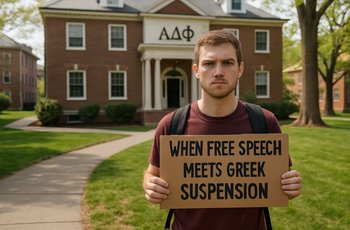

MSU just canceled fraternity recruitment activities following the death of a chapter member. That's the headline. And if you've ever sat on a Panhellenic or IFC council and watched a recruitment freeze play out in real time, you know that sentence contains about a hundred smaller disasters that nobody in the press release bothers to explain.
I'm not here to speculate about what happened or assign blame before the facts are out. What I am here to say is that canceling recruitment - even temporarily, even for the right reasons - sets off a chain reaction that most people outside Greek governance never see coming.
What a Recruitment Halt Actually Means
When MSU pulled the plug on fraternity recruitment activities, that decision didn't just affect one chapter. It affects the entire cohort of potential new members who showed up expecting a process. It affects chapters that had done everything right - submitted their paperwork, completed their risk management trainings, updated their rosters with the university - who now sit in the same suspended state as whoever caused the problem.
That's one of the parts of IFC governance that genuinely frustrates me. Blanket holds. I've seen it happen at multiple institutions. One chapter does something egregious and suddenly the whole council is frozen. There's a logic to it from a liability standpoint - the university is covering itself, the national organizations are covering themselves - but from inside the system it feels like punishing the whole class because one kid threw a chair.
And look, I understand why administrators make that call. A member died. That is not a bureaucratic inconvenience. That is a tragedy and it deserves a serious response. But the mechanism they reach for - halt everything, investigate, restart later - doesn't actually fix the structural problem. It just buys time.
The Governance Gap Nobody Talks About
Here's what I've learned from sitting in council meetings and dealing with university Greek life offices directly: there is almost always a gap between what the national organization requires, what the university requires, and what actually happens at the chapter level. Always. No exceptions.
Nationals will tell you their member education programs are comprehensive. The university will tell you their chapter standards process is robust. And then something happens that makes it very clear those two systems never actually talked to each other about this specific scenario.
I've watched Panhellenic chapters - good chapters, chapters that win scholastic achievement awards and do real community service - get caught flat-footed by a policy conflict between their national headquarters and the university. Not because anyone was acting in bad faith. Because nobody mapped the overlap. Because governance is unsexy work and everyone would rather talk about recruitment numbers.
MSU's situation is a version of this. The details are still coming out. But the response - halt recruitment, assess the situation - is the institutional equivalent of pulling the fire alarm while you figure out if there's actually a fire. Sometimes that's the right call. It's still disruptive and it still has real consequences for real people.
What Happens to the PNMs
I want to spend a second on the potential new members in this situation because they always get forgotten in these conversations.
There are students at Michigan State right now who were planning to go through fraternity recruitment. Some of them drove home for the weekend expecting a rush event on Monday. Some of them are freshmen who don't know anyone yet and saw recruitment as their entry point. Some of them have older siblings in chapters and have been looking forward to this for years.
They didn't do anything wrong. They're not getting a refund on their expectations. They're just - waiting. With no real timeline and incomplete information and whatever rumor mill their GroupMe is currently producing.
That's a governance failure too, even if it's a softer one. The communication protocols for how councils and universities talk to potential new members during a freeze are almost universally terrible. I've seen IFC councils send out one vague email and then go radio silent for two weeks. I've seen universities post a two-sentence statement that raises more questions than it answers.
If you're running a council and something like this happens on your campus, you need someone dedicated to PNM communication. Not a mass email. Actual contact. That part of the process rarely exists in any chapter standards document I've ever read.
This Keeps Happening. That's the Problem.
A member died. Recruitment was canceled. And somewhere in the next few weeks, MSU will restart the process - maybe with new requirements, maybe with an outside review, maybe with a strongly worded addendum to their risk management policies. And then life will continue.
That's the cycle. And it's not unique to Michigan State. It's not unique to any one school or any one organization. The chapters that get in the most trouble are almost never the ones nobody was watching. They're the ones that had warning signs that the system caught too late or processed too slowly.
I believe in Greek governance when it actually functions. I've seen Panhellenic processes work - seen chapters get put on probation, go through real remediation, and come out genuinely better. That happens. It's not a fantasy. But it requires councils and universities and nationals to stop treating every crisis as a one-off and start treating it as information about where the system is broken.
Right now, MSU fraternities are on pause. A family is grieving. And the governance apparatus is doing what it always does - reacting. At some point, somewhere, that has to turn into something more than reaction.