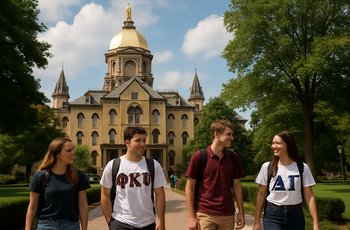

I went to my first Greek event as a guest, not a member. A friend dragged me along sophomore fall - before I'd pledged anything - and I spent most of the night noticing the logistics more than the actual party. There were sign-in sheets. There were people at the door with clipboards. The music cut off at a specific time and everyone kind of just accepted it. I remember thinking: this is way more organized than I expected, and not entirely in a fun way.
What I didn't realize then was that I was seeing the downstream effects of years of campus policy pressure. The sign-in sheets, the designated monitors, the hard stop times - none of that happened by accident. Schools had been tightening social event requirements for a while, and chapters had adapted, sometimes grudgingly, sometimes more thoughtfully than people give them credit for.
What the Policies Actually Changed
Most universities now require registered social events to have a formal guest list, sober monitors, defined start and end times, and in some cases third-party security. That's the baseline at a lot of schools - not the exception. Chapters affiliated with groups like Sigma Alpha Epsilon or Kappa Sigma don't get to just throw something together anymore. There's a paper trail, and the inter-fraternity council or the university's Greek life office usually wants to see it.
The practical effect of this is interesting. Events got smaller in some cases - because a smaller guest list is easier to manage and less likely to attract attention. They also got more structured. Themed events, coordinated with sororities like Zeta Tau Alpha or Alpha Chi Omega, replaced some of the more open-ended gatherings because co-sponsored events often come with shared accountability and that looks better on paper to the administration.
And honestly? Some of that structure created better events. Not all of it - some of it is just compliance theater. But I've been to chapter-organized events that were genuinely more thoughtful because someone had to actually plan them, not just announce a time and location in a group chat.
What Gets Lost in Translation
Here's the thing about heavy event regulation: it shifts who bears the cost. And the cost is almost always time, energy, and money that smaller or newer chapters don't have as much of.
Established chapters with larger budgets, dedicated social chairs, and alumni networks can absorb the administrative overhead. They have people who've done this before. They know how to file the right forms with the university, how to communicate with Greek life staff, how to make the logistics work without it consuming the whole week before an event. A chapter like Sigma Chi or Delta Delta Delta at a major state school has institutional memory that a newer or smaller chapter just doesn't have.
So what ends up happening is a widening gap. The chapters that were already strong stay strong and adjust. Smaller chapters get overwhelmed by compliance requirements they weren't built to handle. Some of them stop hosting events altogether - which sounds like a minor inconvenience but actually matters for recruitment, member retention, and just general chapter culture. Social events aren't frivolous. They're how a lot of people figure out where they belong.
I've talked to people in chapters that basically went dormant socially because the requirements got too complicated for a 30-person chapter with one overworked social chair. That's a real outcome, and it doesn't show up in university press releases about Greek life reform.
The Good That Actually Stuck
I don't want to make this a one-sided critique, because the policies didn't come from nowhere. There were incidents. There were chapters that needed external pressure to take basic safety seriously. Some of those requirements exist because someone got hurt and the university responded - and that's not an illegitimate reason for a policy to exist.
What I've seen work, from the inside, is when chapters internalize the reasoning rather than just checking the boxes. A chapter that actually trains its monitors instead of just designating whoever's around - that's different. A chapter that genuinely curates its guest list because they want people there who want to be there, not just because the form requires a number - that's different too.
Pi Beta Phi and Kappa Kappa Gamma chapters I've interacted with have social committees that treat event planning like an actual job. They're not doing it reluctantly. They've built it into their culture. Whether that happened because of policy pressure or despite it, I honestly can't say. Probably both.
There's also something to be said for the shift toward philanthropy events and community-focused programming as an alternative social outlet. Not because those replace everything else, but because they give chapters a different kind of visibility - one that's a lot easier to defend to a dean or a national headquarters when they come asking questions.
Where This Leaves Everyone
What's kinda strange about all this is that the Greek chapters most affected by social event policies are often not the ones that caused the incidents that prompted the policies. That's a real tension that nobody in university administration seems eager to talk about publicly.
Blanket rules applied across every chapter regardless of track record create a weird dynamic. A chapter that's never had a serious incident still has to navigate the same requirements as one that's been on probation twice. That doesn't feel like accountability - it feels like liability management. And most chapter members are smart enough to see the difference.
I'm not gonna pretend there's a clean answer here. The policies exist for reasons, and some of those reasons are serious. But if the goal is chapters that take events seriously because they genuinely care about their members and guests - not just because they're scared of sanctions - the current framework gets you partway there and then stalls.
I joined Greek life skeptical of it, and I'm still capable of being skeptical. This is one of those areas where I think the instinct behind the policy was right and the execution is still a work in progress.