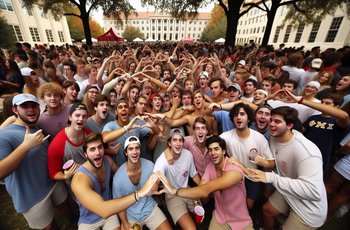
Swarthmore is a small, highly selective liberal arts college just outside Philadelphia, and its Greek scene reflects that — it's an intimate system with a handful of active chapters rather than the sprawling Greek rows you'd find at a large state school. There are two fraternities operating under IFC and one sorority under Panhellenic: Delta Upsilon, Phi Kappa Psi, and Kappa Alpha Theta. That's the full picture right now.
Because Swarthmore's total undergraduate enrollment sits around 1,600 students, even a small Greek presence represents a real slice of campus social life. That said, Swarthmore has a pretty independent, academically intense culture — the school is known for its rigorous coursework and politically engaged student body — so Greek organizations exist alongside a lot of other social outlets rather than dominating the scene outright.
Rush and recruitment here tend to be more low-key than what you'd see at big IFC or Panhellenic schools. There's no massive formal rush week with hundreds of events and strict timelines. The process is generally more relaxed and conversational, which fits the campus vibe overall.
On the housing side, Swarthmore doesn't have a traditional Greek row. Chapters don't operate large standalone houses the way fraternities and sororities do at bigger universities. Social events tend to happen within campus spaces rather than off-campus chapter houses.
Philanthropy and community service are common threads across Greek life nationally, and Swarthmore's chapters participate in that culture in their own way, though the programming is naturally smaller in scale given the size of the organizations. The discussion around Greek life at Swarthmore is ongoing — the school community has historically had a complicated relationship with Greek organizations — so the chapters that are active tend to be pretty intentional about how they present themselves on campus.



 Rate
Rate