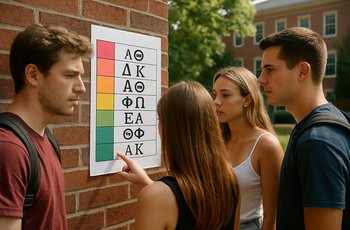

When Oglethorpe University students launched Lambda Theta Alpha - making it the school's first Latin Greek organization - most people outside Atlanta probably didn't notice. No viral moment, no national coverage. Just a group of students deciding their campus needed something it didn't have yet. And honestly, that quiet kind of founding story is worth paying attention to.
I'll be upfront: I went Greek at a mid-sized state school where the Panhellenic and IFC chapters had been around for decades. The infrastructure was already there. Recruitment was a whole production. There were houses, budgets, alumni networks going back to the 1970s. Starting something from scratch wasn't something I ever had to think about.
But a lot of students don't have that luxury. And at a small school like Oglethorpe - which enrolls somewhere around 1,200 undergrads - the Greek scene isn't exactly sprawling. For Latin students there, the options before this were basically: join an organization that wasn't built with your community in mind, or don't join at all.
Why This Matters Beyond the Headlines
Lambda Theta Alpha isn't a new organization nationally. It was founded in 1975 at Kean University in New Jersey and is one of the oldest Latin sororities in the country. So this isn't about reinventing anything. It's about a chapter finally existing somewhere it didn't before, because students decided to make it happen themselves.
That distinction matters. There's a difference between a chapter getting dropped on a campus by nationals because it looks good in a diversity report, and students actually going through the work of petitioning, getting recognized, building membership from zero. The second one is harder. It also tends to produce chapters with a stronger sense of identity, because the founding members had to fight for the thing before they could enjoy it.
And for smaller schools specifically, this is a pattern I think deserves more attention. Big Greek conversations usually center around schools like Alabama, Ole Miss, UCLA, or large state universities where Greek life is already embedded in the social fabric. The small school experience is genuinely different - tighter community, fewer resources, more overlap between your chapter and every other social circle on campus.
What Panhellenic Doesn't Cover
Here's the thing about multicultural Greek organizations that I don't think gets said plainly enough: they exist because Panhellenic and IFC didn't serve everyone. That's not a controversial statement, it's just history. National Pan-Hellenic Council organizations were founded because Black students were excluded from white fraternities and sororities. Multicultural councils formed for similar reasons. Lambda Theta Alpha and organizations like it weren't created to be a niche alternative - they were created because the existing structure left people out.
That history doesn't just disappear because campuses are more integrated now. Culture, language, shared identity - those things still matter to people when they're choosing where they want to belong. A Latina student at Oglethorpe who wanted that specific kind of sisterhood didn't have a local option until now. That's a gap. And the students who founded this chapter clearly felt it.
I'm not gonna pretend that every campus needs every type of organization, or that Greek life is the right fit for everyone. But when a campus has Greek life and that Greek life doesn't reflect the actual student body, that's a problem worth naming.
The Founding Moment Is the Hardest Part
Most people who join established chapters don't fully appreciate what it took to get there. Somebody before you wrote the founding documents. Somebody stood in front of a student government board and made the case. Somebody recruited the first ten members when there was no reputation to recruit on, no history to point to, no established sisterhood to promise.
The students at Oglethorpe who launched Lambda Theta Alpha are those people now. And unlike joining a chapter that's been on campus for thirty years, they don't have a blueprint. There's no alumni base locally who did this before them. Every tradition they build, every ritual they run, every new member class they bring in - that's all going to be theirs in a way that most Greek members never get to experience.
It's kinda a different thing entirely, founding versus joining. Both have value. But founding takes a specific kind of commitment that I have real respect for, especially at a school where Greek life isn't the dominant social structure and you can't rely on institutional momentum to carry you.
The conversations in Greek life right now tend to focus on hazing controversies, recruitment drama, or whether Greek life is even worth it anymore. Those are real conversations. But so is this one - a handful of students at a small university in Atlanta deciding that their community deserved a seat at the table and going out and building it themselves. That's what Greek life is actually supposed to look like when it works.