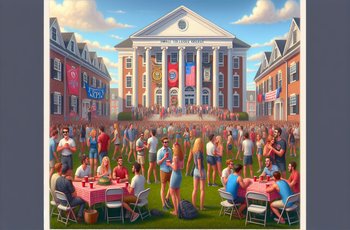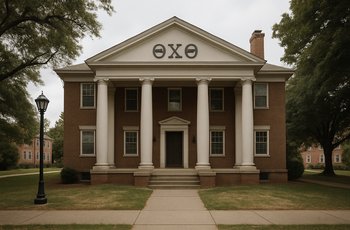

Michigan State's Fraternity and Sorority Life put together a Safe Halloween program this year, and I want to talk about what that actually means from an organizational standpoint - because most people either roll their eyes at initiatives like this or treat them like a PR stunt. Neither reaction is right.
I've sat through enough Panhellenic council meetings to know that programming like this doesn't just appear. Somebody had to write the proposal. Somebody had to get chapter presidents to sign off. Somebody had to coordinate with the university's FSL office, probably go through three rounds of revisions, and then actually execute the thing. That's not nothing. That's governance working the way it's supposed to work - and it's rarer than people think.
What Programs Like This Actually Require
Here's the thing about community-wide events in Greek life: getting all your chapters moving in the same direction is genuinely hard. You've got chapters that don't like each other, chapters that are on social probation and have a chip on their shoulder about anything the council touches, chapters that think every Panhellenic initiative is some kind of overreach. Getting even moderate buy-in across an entire Greek community takes real political work. I'm not exaggerating when I say I've watched a single event planning meeting collapse because two chapter presidents had beef going back to recruitment season.
So when MSU's FSL office coordinates something like a Safe Halloween - a community-facing, positive-image event that presumably involves multiple chapters - that signals a council that has enough internal trust to actually function. That's not automatic. It gets built over semesters of consistent communication, clear standards enforcement, and Panhellenic or IFC leadership that has credibility with the chapters they represent. You can't manufacture that credibility. You earn it, or you don't have it.
The State News coverage of this is pretty surface level, which is understandable - it's a campus paper covering a community event. But what's missing from that coverage is any acknowledgment of the infrastructure that makes something like this possible. The story is the event. The real story is what had to be working behind the scenes for the event to happen at all.
The Cynical Read and Why It's Incomplete
Look, I get the skeptical take. Safe Halloween programming looks good in a university report. It gives FSL administrators something to point to when they're defending Greek life to a provost or a board of trustees. Greek organizations are not unaware that positive community events create goodwill they might need to draw on later. I've watched chapters volunteer for service events specifically because they were in a precarious standing situation and needed the optics. That's real, and pretending it doesn't happen is naive.
But here's where the cynical read breaks down: even if the motivation is partly strategic, the event still happens. Kids in the surrounding neighborhood - or on campus, or whoever participates in this kind of thing - still get a safer, more organized Halloween experience because a Greek community decided to do something constructive. The motivation doesn't cancel out the outcome. And frankly, any organization that only does good things for purely selfless reasons is either lying or has no self-awareness about how institutions work.
Greek life is an institution. Institutions act in their own interests. That's not a scandal - that's just how organized groups survive. The question is whether the self-interest happens to align with something genuinely beneficial. In this case, it does.
MSU's Bigger Context Matters Here
Michigan State's Greek community has had a complicated few years. Any FSL office operating on that campus is doing so under real scrutiny - from the university, from alumni, from the press. That pressure can go one of two ways: it can make chapters defensive and insular, or it can push council leadership to be genuinely proactive about what their community looks like from the outside.
A Safe Halloween event is a small signal, but it's a signal pointing in the right direction. It says the Greek community there is trying to be a visible, constructive part of campus life rather than just hunkering down and waiting for the next news cycle to pass. I've seen Greek communities do both. The ones that hunker down tend to make things worse for themselves - they lose campus goodwill, they lose university support, and eventually they lose chapters. The ones that show up for their campus - even when it's kinda unglamorous work like passing out candy or staffing a community event - tend to build the kind of goodwill that actually protects them when something goes wrong down the road.
And something always goes wrong eventually. That's not pessimism, it's just statistics. A Greek community that has built genuine relationships with its university and surrounding neighborhood has more room to recover when a chapter screws up. A community that has been invisible or antagonistic has none.
So no, I'm not gonna pretend this Safe Halloween story is some monumental moment for Greek life. It isn't. It's one event at one school. But it represents a choice - the choice to show up and do the boring, unglamorous work of being a responsible part of your campus community. That choice matters more than people give it credit for. The chapters that understand that tend to be the ones still standing ten years from now.