
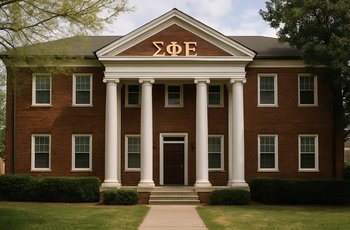
When guys start asking about fraternities, the conversation almost always goes straight to the IFC chapters - the ones on Fraternity Row, the ones with the houses, the ones everyone recognizes by reputation. But there's a whole other category of fraternities that exists on most campuses, and the fact that nobody explains the actual difference before you rush is a real problem. Not a brochure problem. A "you might join the wrong thing entirely" problem.
So here's what that difference actually looks like in practice, from someone who watched both sides of it play out for four years.
What IFC Actually Means
IFC stands for Interfraternity Council. It's the governing body that oversees most of the traditionally structured, historically white fraternities on campus - your Sigma Chi, your Kappa Sigma, your Sigma Alpha Epsilon, your Pi Kappa Alpha chapters. These are the fraternities that typically hold formal recruitment in the fall, operate out of chapter houses, and fall under a set of national standards that the IFC helps enforce locally.
The structure is real. You have a rush process with specific dates. You get a bid. You pledge. You initiate. There's a timeline, and it's relatively uniform across chapters because the IFC sets shared rules for how recruitment operates on your campus. That consistency is actually useful when you're a freshman trying to figure out what you're doing.
But IFC also means you're playing inside a system with a lot of moving parts - your chapter's relationship with Panhellenic, your chapter's standing with the university, national headquarters expectations, risk management policies, all of it. The chapter doesn't exist in a vacuum. It answers to multiple layers of oversight. Some guys find that structure helpful. Others find it suffocating. Both reactions are valid.
Non-IFC Is Not One Thing
This is where people get confused, because "non-IFC" isn't a single category. It's everything else. And everything else covers a huge range.
You've got the National Pan-Hellenic Council fraternities - the Divine Nine organizations like Alpha Phi Alpha, Kappa Alpha Psi, Omega Psi Phi, Phi Beta Sigma. These are historically Black fraternities with deep roots in social justice and community service that go back over a century. Their intake process is completely different from IFC rush. It's not open every semester, it's not a two-week event with themed nights, and you don't just show up and see what happens. The commitment level is high, the history is serious, and the brotherhood tends to be extraordinarily strong. Comparing NPHC fraternity membership to IFC membership isn't really fair to either - they're built on different foundations for different reasons.
Then you've got multicultural Greek councils, sometimes called MGC, which house fraternities that formed around specific cultural communities - Latino fraternities like Lambda Theta Phi, Asian-interest fraternities, South Asian fraternities like Alpha Iota Omicron. These chapters often run on smaller budgets, operate without houses, and do their own thing largely outside the social infrastructure that IFC chapters dominate. The brotherhood in these orgs tends to be tight in a way that's hard to explain - partly because they're not swimming in resources, so what holds them together is actually the people.
And then there are independent fraternities. Local fraternities with no national affiliation. Professional fraternities organized around fields like business or engineering. Service fraternities like Alpha Phi Omega. These organizations vary wildly in structure and culture, and you really have to evaluate them individually because there's no umbrella organization setting baseline standards.
The Practical Differences That Matter
Honestly, the biggest thing that separates IFC from most non-IFC orgs comes down to visibility and resources - and what that does to the culture inside the chapter.
IFC chapters, especially well-established ones, often have alumni networks, chapter houses, full event calendars, and name recognition that does work for you before you even open your mouth at a career fair. That's real. I'm not gonna pretend it isn't. Sigma Chi on a campus where Sigma Chi has been around for 60 years carries weight in certain circles.
But that visibility has a cost. Big IFC chapters can be socially competitive in ways that have nothing to do with character. You can end up in a chapter of 80 guys and genuinely not know 30 of them. The recruitment process sometimes optimizes for a type rather than for fit. And when a chapter is too big and too visible, the accountability for individual members gets diluted fast.
Non-IFC chapters - especially NPHC and MGC orgs - tend to be smaller and the membership tends to mean more in a direct, day-to-day way. You know your brothers. They know you. There's less performance involved because there's no social ladder attached to the name. That's not universally true, but it's a pattern I saw repeatedly.
The resources gap is real though. Non-IFC chapters often can't fund the same programming, don't have a house to anchor social life in, and sometimes struggle to get campus attention during recruitment because IFC has the infrastructure to run louder events. If you want the full chapter house experience with the built-in social scene, that's almost exclusively an IFC thing at most schools.
What You Should Actually Ask Yourself
Before you walk into any rush event, you need to be honest about what you're actually looking for. Not what sounds good. What's actually true for you.
If you want a smaller brotherhood where you'll know everyone deeply and the cultural identity of the organization genuinely resonates with you - look beyond IFC. Seriously look. Most freshmen don't even know MGC or NPHC chapters exist on their campus because the marketing reach isn't the same. That's a failure of campus orientation, not a reflection of those orgs' value.
If you want the big structured experience with alumni networks and a chapter house and a formal recruitment process, IFC probably fits that better. Just go in knowing the chapter culture varies enormously even within IFC - Kappa Sigma at one school is not Kappa Sigma at another, and the national letters don't guarantee anything about the specific people you'd be living with.
The worst thing you can do is default to IFC because it's what you've heard of. That's kinda how people end up in chapters that looked right from the outside and felt hollow from the inside. Ask current members what they actually do together on a Tuesday. That question cuts through a lot of noise fast.