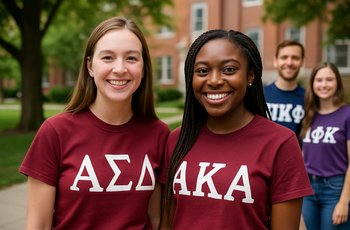
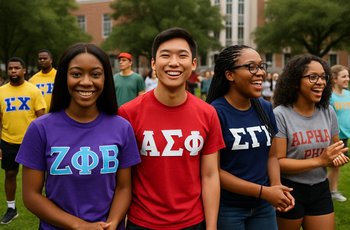
The University of Houston just wrapped Greek Week, and the coverage coming out of it is exactly the kind of thing that makes Panhellenic people like me feel two things at once - proud and a little skeptical. Proud because Greek Week, when it actually functions, is one of the best arguments for the whole system. Skeptical because I've sat in enough council meetings to know how much invisible labor goes into making something like that look seamless from the outside.
UH's Greek community pulled it off. Events, community, chapters coming together across council lines - IFC, Panhellenic, NPHC, all of it. And that's not nothing. That's actually hard. But here's what the press release version of Greek Week never tells you: the amount of coordination required to make that happen without someone filing a formal complaint or a chapter pulling out last minute is genuinely staggering.
What Greek Week Actually Costs the Council
I don't mean money, though that's real too. I mean political capital. Every Greek Week I was involved in planning came down to somebody having to make a call that upset at least one chapter advisor, one risk management chair, or one very passionate Greek life coordinator who had opinions about the event schedule. You're working across multiple governing councils that each have their own bylaws, their own standing rules, their own ideas about what's appropriate and what isn't.
Point systems are always a source of drama. Every chapter wants to know exactly how philanthropy points are weighted versus participation points versus spirit events. And if the rubric isn't airtight going in, you will spend the back half of the week fielding grievances. I've watched chapters - good chapters, chapters with strong leadership - get so wrapped up in the competitive side that the actual community-building part becomes secondary. The scoreboard starts to matter more than the reason you're keeping score.
That's not a UH-specific problem. That's Greek Week everywhere.
Cross-Council Programming Is Harder Than It Looks
Here's the thing people outside governance don't fully appreciate: getting IFC fraternities and Panhellenic sororities to cooperate on a shared schedule is one thing. Getting National Pan-Hellenic Council organizations meaningfully included - not just listed on a flyer but actually centered in the programming - is a completely different challenge. The histories are different, the organizational structures are different, the relationships between chapters and their national organizations are different.
When Greek Week works the way it's supposed to, it's because someone on the council was paying attention to that. Someone made sure it wasn't just Sigma Chi and Kappa Kappa Gamma dominating every event bracket while everyone else cheers from the sideline. Whether that happened at UH this year, I genuinely don't know - the coverage doesn't get that granular. But the fact that the story exists, that UH is putting this out publicly, suggests they want to be seen as a community that functions. And wanting to be seen that way is at least a starting point.
Honestly, the schools that do Greek Week well tend to be the ones where the Greek life office has a real working relationship with the councils - not an adversarial one. The university-as-watchdog model, where FSL staff exist primarily to document violations and pull chapter recognition, doesn't produce the kind of trust you need to pull off a week of cross-community programming. UH seems to have something that at least resembles a functional relationship there.
The Cynical Read and Why I'm Resisting It
I know what some people will say. Greek Week is PR. It's a way to generate feel-good content when the broader national narrative about Greek life is still pretty rough. And yeah, there's truth to that. Universities have figured out that a photo of chapters doing a community service project together is a useful counterweight to whatever the last headline was.
But I'm not gonna dismiss it entirely just because institutions benefit from it. The students doing the tug-of-war or the philanthropy events or whatever UH put together this year - they're getting something real out of it. The freshman who's three weeks into her new chapter and suddenly finds herself working alongside women from Alpha Chi Omega and Zeta Tau Alpha on a shared event - that matters. That's a cross-chapter relationship that might actually last.
The problem is when the event becomes the whole strategy. When Greek Week is the one moment of intentional community-building and then everyone retreats back into chapter silos for the other fifty weeks of the year. That's where I get frustrated. Greek Week should be a temperature check, not a yearly exemption from doing the harder work of maintaining a real community.
UH deserves credit for making it happen and making it visible. But the councils that run Greek Week on Sunday and are back to fighting about recruitment violations on Monday - that's the norm, not the exception. And no amount of event photography changes that.
The measure isn't whether you can pull together for one week. It's what the council actually does with the relationships built during that week. Most of the time, that question never gets asked.