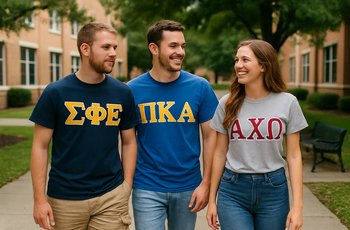

George Washington University just brought Greek Week back after a four-year pause, and everyone's treating it like a feel-good story. And sure, it is. But if you've ever sat on a Panhellenic council and actually had to coordinate something like this across multiple chapters, across IFC and Panhellenic and NPHC, you know the headline is about ten percent of what actually happened here.
The other ninety percent is months of meetings, bureaucratic back-and-forth, chapters that don't want to cooperate, and somebody - usually an unpaid student officer - holding all of it together with sheer stubbornness. I don't say that to diminish the GW students who pulled this off. I say it because they deserve more credit than a cheerful news cycle is giving them.
Four Years Is a Long Time to Lose Institutional Knowledge
Here's the thing about a four-year gap. That's not just a pause. That's an entire generation of members who never experienced Greek Week at all. The students who organized the last one before the pause have graduated. The unwritten rules, the chapter rivalries, the event formats that actually worked - all of that lives in people's heads, not in any handbook. And now those people are gone.
When I was on council, we dealt with something similar on a smaller scale - just one year off from a tradition and suddenly nobody knew who was supposed to book the venue, who had the contact for the sound equipment, or why a specific chapter was always excluded from certain competitions. That stuff sounds trivial until you're six weeks out and nothing is confirmed.
Reviving something after four years means essentially building it from scratch while pretending you're just picking up where you left off. That's a weird position to be in. You're referencing a tradition you never actually experienced. And you have to sell that tradition to your own chapter members who are equally in the dark.
The Coordination Problem Nobody Talks About
Greek Week - done right - requires IFC and Panhellenic to actually work together. And I want to be honest about something: that is not always the default state of things. These are two separate governing bodies with separate budgets, separate relationships with the university, and sometimes genuinely competing priorities during the same semester.
Getting chapters to agree on a unified event schedule sounds simple. It is not. You've got risk management policies from national organizations that vary wildly - what Sigma Alpha Epsilon allows at a joint event is not necessarily what Alpha Chi Omega's national standards permit. And somebody has to reconcile all of that before you can announce a single activity to the broader campus.
Then there's chapter standing. If any chapter is on social probation or under investigation, do they participate? Do you hold a spot for them? Do you publicly acknowledge the gap in the lineup? There's no clean answer, and whoever is running the Panhellenic or IFC exec at GW this year had to make judgment calls on exactly these kinds of questions without a clear precedent to fall back on.
Honestly, the fact that they pulled it off at all suggests the council leadership this year is operating at a pretty high level. That's not nothing.
What This Actually Signals for GW Greek Life
I think the revival matters more as an organizational signal than as an event. Greek Week isn't just philanthropy and competitions. It's a proof of concept. It tells the university, the students who are considering recruitment, and the chapters themselves that Greek life at GW is functional enough to execute something complex and public-facing.
A lot of campuses are in situations right now where Greek life is technically active but organizationally frail. Chapters are undermanned. Recruitment numbers are inconsistent. The relationship with the university administration is guarded at best. In that context, successfully running a cross-council event after a four-year gap is a direct counter-argument to anyone who thinks the system is too far gone to work.
GW is not a small campus with a tiny Greek community operating under the radar. It's a school in Washington D.C. with real visibility and a politically active student body. Greek life there operates with a certain amount of scrutiny that most chapters at mid-sized state schools don't have to deal with. That context makes this accomplishment more significant, not less.
But - and this is where I get frustrated - a successful Greek Week does not fix structural problems. If GW's Panhellenic has chapters with low membership, or if IFC is dealing with chapters that are in and out of good standing, one good event doesn't solve that. The feel-good press around revival events tends to let everyone exhale too early. The real work is what happens in the twelve months after the event closes out.
The students who organized this deserve to enjoy the win. I just hope they're not being handed the trophy and then left to figure out sustainability on their own. Because that's usually what happens. Somebody does the hard unglamorous work of reviving a tradition, it goes well, and then they graduate - and the cycle of institutional memory loss starts all over again.
Document everything. Write it down. Leave the next council something to actually work from. That's the advice nobody gives at the end of a successful Greek Week, and it's the only advice that actually matters for what comes next.