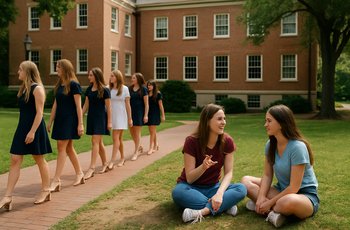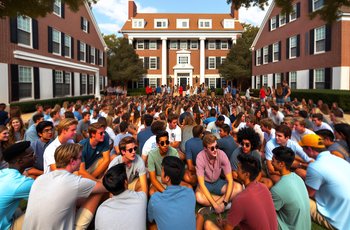

Arkansas Tech is running recruitment again this fall, and if you've never seen a mid-sized regional university try to pull off formal recruitment season with limited staff, limited housing, and a student body that's still figuring out what Greek life even is - you're missing something genuinely instructive. The story out of Russellville is straightforward on the surface: fraternities and sororities are opening their doors and looking for new members in fall 2026. But from where I'm sitting, having spent two years on a Panhellenic council watching recruitment logistics either hold together or completely fall apart, there's a lot more going on beneath that headline than a simple invitation.
Fall Recruitment Is a Different Animal
Most people assume recruitment is recruitment. You show up, you talk to people, you get a bid. And sure, that's the basic arc. But fall recruitment at a school that isn't a flagship university operates under a completely different set of pressures than what you'd see at, say, the University of Arkansas main campus in Fayetteville. The chapter sizes are smaller, which means every single bid matters more to the numbers. The Panhellenic quotas get tighter. And the IFC chapters are often scrambling to hit minimums that would look embarrassingly low at a bigger school but are genuinely hard to achieve when your eligible recruitment pool is a few hundred guys who showed up on campus two weeks ago.
I watched our council spend three meetings debating whether to adjust quota by four women - four - because one chapter's membership numbers made the math impossible otherwise. That kind of granular struggle is what fall recruitment actually looks like from the inside. The public-facing version is booths on the quad and smiling faces at info sessions. The internal version is spreadsheets and arguments about COB policy.
Arkansas Tech running recruitment in fall 2026 isn't news in a flashy sense. But it matters because it signals that chapters there are stable enough to recruit, which is not something you can take for granted at smaller schools. Chapters go inactive. They lose their charters. They get placed on suspension right before recruitment and suddenly you've got a Panhellenic structure with a gap in it that throws off the whole process. The fact that they're running a full recruitment cycle - fraternities and sororities together - is actually a decent sign of organizational health.
What Regional Schools Get Wrong About Recruitment Season
Here's the thing about smaller regional campuses running Greek recruitment: they often copy the structure of bigger schools without having the infrastructure to support it. Formal sorority recruitment with multiple rounds, preference night, the whole sequence - that model was built for schools where chapters have 150-plus active members and dedicated recruitment chairs who've been trained by their national organizations. When you scale that down to a chapter with 40 women and a recruitment chair who's also the chapter president because there aren't enough people to split the roles, it gets messy fast.
I'm not saying Arkansas Tech is doing this wrong. I genuinely don't know enough about how their specific chapters operate. But the pattern is real and it shows up everywhere. Small Panhellenic councils implement complicated recruitment policies they borrowed from Big Ten schools and then wonder why the process feels chaotic. Sometimes simpler is better. Sometimes a two-round recruitment with clear timelines and honest conversations is more effective than a five-day formal process that nobody has the bandwidth to actually run well.
The fraternities have their own version of this problem. IFC formal recruitment has gotten increasingly structured at the national level, and chapters at smaller schools are expected to follow frameworks that assume a level of resources and membership that just isn't there. Kappa Sigma or Sigma Chi chapters at regional schools are kinda operating in a different universe than their chapters at flagship campuses, and treating them identically in terms of recruitment expectations is a mistake that national organizations keep making.
The Numbers Will Tell the Story in Spring
What I'll actually be watching for is what the membership numbers look like after fall recruitment closes. That's the real indicator. Did the sororities hit quota? Did the fraternities make it past the minimum threshold to stay in good standing with IFC? Did any chapters have to go to continuous open bidding immediately because formal recruitment didn't get them where they needed to be?
COB - continuous open bidding for the non-Panhellenic people reading this - is the fallback that sororities use after formal recruitment when they're still under total. It's less structured, more relationship-driven, and honestly more honest in a lot of ways. But it's also a signal that formal recruitment didn't fully deliver. Some chapters treat it as a failure. Others are smart about it and use it as a second window to find members who weren't ready to commit during the formal rush period. Which approach a chapter takes tells you a lot about how that chapter leadership thinks.
For fraternities, the equivalent is just... extended recruitment, which has always been more informal anyway. IFC chapters don't run the same kind of rigid quota system. They can keep recruiting through the semester in ways that Panhellenic chapters can't. That flexibility is an advantage at smaller schools where the recruitment window during the first two weeks of classes might catch students before they're actually ready to make a decision.
Arkansas Tech's Greek chapters going into fall 2026 recruitment have a real opportunity here. New students, a clean slate, a chance to build something. But the execution matters more than the announcement. A news story saying recruitment is happening is the easy part. What actually happens in those rooms - how chapters present themselves, how they treat potential new members, whether the process feels worth the effort - that's what determines whether this recruitment cycle is a success or just something that technically occurred.
The Panhellenic council there is gonna carry most of the weight on the sorority side, whether they realize it yet or not. I hope they have a solid recruitment chair coordinator and a clear adjudication process for any COB disputes. Because those disputes will happen. They always do.