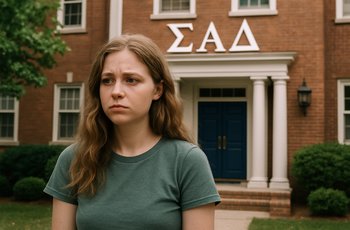

When a university starts cutting DEI programs, the first thing administrators will tell you is that the core mission stays intact. The second thing they'll do is eliminate the exact infrastructure that makes that mission possible for students who were never the default to begin with. At UNC Chapel Hill, members of cultural interest Greek organizations are now dealing with exactly that - and they're speaking up about it.
The Daily Tar Heel ran a piece on how cultural interest Greek organizations at UNC are responding to the university's DEI cuts. And if you've spent any time around these organizations - the historically Black fraternities and sororities of the National Pan-Hellenic Council, the Latinx Greek orgs, Asian-interest fraternities and sororities - you already know why this hits differently for them than it might for a chapter of Kappa Kappa Gamma or Sigma Chi.
Cultural Greek Life Was Never Just Social
Here's the thing that gets missed in almost every mainstream conversation about Greek life: cultural interest organizations weren't founded to throw parties and build alumni networks. They were founded because students were excluded from everything else. That history isn't decorative. It's the whole point. When you cut the DEI offices, cultural centers, and support staff that help these organizations function and recruit, you're not trimming bureaucratic fat. You're pulling the floor out from under groups that were already working with less.
Mainstream Greek chapters - and I say this as someone who was in one - have decades of institutional momentum behind them. Established alumni bases, chapter houses, endowments, national organizations with legal teams. Cultural Greek orgs often don't have that cushion. A lot of them rely on university resources more heavily because they don't have the same private infrastructure. So when those resources disappear, the impact isn't equivalent across the board. It's disproportionate. That's not an opinion, that's just math.
What DEI Programs Actually Did for These Chapters
People who've never needed DEI offices tend to underestimate what they actually did day to day. For a lot of cultural Greek organizations, those offices meant having a staff contact who understood their specific recruitment challenges. Someone who could help with event space, with visibility during orientation week, with connecting new students from underrepresented backgrounds to communities where they'd actually feel at home.
Sorority recruitment for a mainstream chapter at a big SEC school is a whole machine - millions of dollars, rush coaches, social media consultants, the works. Recruitment for a smaller cultural interest sorority is often just a few active members doing everything themselves, hoping the right first-year student finds them before she signs a bid somewhere else. DEI support was sometimes the only institutional help those members had. Cutting it isn't neutral. It advantages the organizations that were already advantaged.
And look, I get that DEI has become a political flashpoint. I'm not interested in litigating the whole national debate here. What I am interested in is the concrete, on-the-ground impact on actual students who joined organizations that exist specifically to serve communities that have historically been excluded from campus life. Those students didn't sign up to be collateral damage in a culture war.
The Part Greek Councils Need to Reckon With
UNC isn't the only school going through this, and that's the part that should make every Panhellenic and IFC council in the country pay attention. We talk a lot in Greek life about community and belonging and making sure everyone has a place. But when cuts come, the organizations most likely to absorb the hit without much notice are the ones that were already fighting to be seen.
If your Panhellenic council isn't actively figuring out what cultural interest organizations on your campus need right now - not in a performative, post-a-graphic way, but in a practical, what-resources-can-we-actually-share way - then the belonging rhetoric is just that. Rhetoric.
I watched this play out at my own school. When things got harder institutionally, the chapters with the most resources barely felt it. The chapters with the least resources felt it immediately. That's not a coincidence. It's a structural problem that Greek life as a whole keeps not naming out loud.
The members speaking up at UNC are doing something that takes real courage - pushing back publicly against their own university at a moment when the political climate makes that genuinely risky. That deserves more than a news cycle. It deserves the rest of Greek life actually paying attention and asking what their own campuses look like when you zoom out past the houses with the nice lawns.
Cultural Greek organizations have always had to work harder to hold space that was never fully given to them. The least the rest of us can do is stop pretending that cutting DEI support affects everyone equally. It doesn't. And acting like it does is its own kind of erasure.