
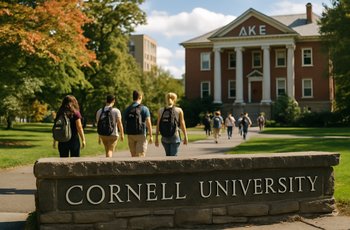
Cornell University says it's going to take a "serious look" at its fraternities following rape allegations that have put the school under a national microscope. And look, I've heard that phrase from university administrators more times than I can count. "Serious look." It's the institutional version of "we'll talk about this later" - which, as anyone who grew up in a household with parents who said that knows, usually means nothing happens until something way worse occurs.
I graduated in 2024. I did four years in a fraternity. I watched my school do its own version of the "serious look" at least twice. So I'm not coming at this as someone who hates Greek life or wants to see it burned down. I'm coming at this as someone who genuinely loved his chapter and still thinks most universities are terrible at responding to serious problems until the press forces their hand.
The Words Matter More Than We Admit
Here's the thing about language like "serious look" - it's designed to sound decisive without actually committing to anything. It's not "we are suspending all fraternity activity pending review." It's not "we have opened a formal investigation with external investigators." It's a phrase that gives administrators room to do a lot or a little, depending on how the news cycle shakes out next week.
Cornell has had a complicated relationship with its Greek chapters for years. This isn't a school that's been caught totally off guard by the idea that fraternities can produce dangerous situations. The allegations driving this latest round of scrutiny are serious - rape allegations don't get more serious than that - and the university's response, at least in how it's being framed publicly, sounds a lot like managed optics rather than immediate accountability.
I'm not saying Cornell is doing nothing. I genuinely don't know what's happening internally. But the public-facing statement sounds like a communication strategy, not a safety plan. And that distinction matters when the people asking for answers are survivors and their families.
What "Looking Seriously" Actually Has to Mean
If Cornell actually wants this to be different from every other "serious look" in recent Greek life history, a few things have to happen that almost never do.
- Independent investigators, not internal university staff who report to the same administrators who approved these chapters in the first place
- Real transparency about what the investigation finds - not a sanitized summary released six months later during spring break when no one's on campus to protest
- Actual structural consequences for chapters where problems are found, not just individual member discipline that lets the organization itself walk away clean
- A honest conversation about how much the university itself benefits financially and reputationally from Greek life - because that incentive structure shapes every "serious look" before it even starts
That last one is the one no one wants to say out loud. Universities are not neutral parties when they investigate their own Greek systems. Alumni giving, campus housing, social infrastructure, recruitment yield - Greek life is woven into the financial fabric of these schools in ways that create real conflicts of interest. A genuinely serious look would acknowledge that upfront.
Greek Life Doesn't Get to Sit This One Out Either
And before anyone reading this starts nodding along thinking this is just a university failure story - it's not only that. Fraternities have to own their part of why universities don't trust them to self-regulate.
Honestly, I loved my chapter. Some of my best memories from college happened because of those guys. But I also watched brothers make choices that, if they'd gone differently, could have put us in the exact headlines Cornell is dealing with right now. The culture that protects the chapter's reputation over individual accountability is real. I've seen it. Most guys who spent real time in Greek life have seen it, even if they don't want to admit it publicly.
When a fraternity's first instinct after a serious allegation is to manage the story rather than cooperate fully with investigators, that's not a few bad actors. That's a culture problem. And that culture problem is exactly why universities feel like they have to step in with their own "serious looks" - because chapters have historically made it impossible for anyone to trust that internal accountability will actually happen.
The chapters at Cornell that have nothing to do with these allegations are gonna feel the weight of this too. That's frustrating and, in some ways, unfair to brothers who are running clean operations. But that's also how institutional trust works. You either build it consistently or you don't have it when you need it most.
Cornell's "serious look" could become a model for how universities actually handle this. Or it could become another case study in institutional self-protection dressed up as reform. The difference between those two outcomes isn't gonna be determined by the press release. It'll be determined by what happens in the next six months when the cameras aren't pointed at Ithaca anymore.
I hope they prove me wrong. I've just been watching this playbook long enough to know better than to assume they will.